Partial least squares regression
Partial Least Squares Regression (PLSR), also known as Partial Least Squares Structural Equation Modeling (PLS-SEM), is a statistical method that bears similarities to principal components regression; instead of finding hyperplanes of maximum variance between the response and independent variables, it finds a linear regression model by projecting the predicted variables and the observable variables to a new space. This technique is particularly useful in scenarios where the predictors are many and highly collinear, or when the number of observations is less than the number of predictors, thereby making traditional regression models unsuitable.
Overview[edit]
PLSR is a form of regression that combines features from both principal component analysis (PCA) and multiple regression. It is particularly useful in analyzing data with complex, multidimensional relationships. PLSR projects the independent variables (X) and the dependent variables (Y) into a new space formed by latent variables, which are linear combinations of the original variables. The goal is to maximize the covariance between the projected X and Y.
Applications[edit]
PLSR has been widely applied in various fields such as chemometrics, sensory analysis, and social science research. In chemometrics, for example, it is used to predict the concentration of chemical constituents in a mixture based on spectroscopic data. In sensory analysis, PLSR can help in understanding how different sensory attributes contribute to the overall acceptability of a product. In social sciences, it is used to model complex relationships between observed variables and latent constructs.
Mathematical Formulation[edit]
The mathematical foundation of PLSR involves the decomposition of the original data matrices, X (predictors) and Y (responses), into a set of scores and loadings for both X and Y, such that the covariance between the X scores and Y scores is maximized. This is achieved through an iterative algorithm, typically starting with a simple linear regression of Y on X, followed by extraction of latent variables that explain the maximum variance-covariance relationship between X and Y.
Advantages and Limitations[edit]
One of the main advantages of PLSR is its ability to handle highly collinear, high-dimensional data sets where traditional regression fails. It is also less sensitive to outliers compared to other regression techniques. However, PLSR can be criticized for its lack of a statistical foundation in terms of inference, making it difficult to assess the significance of the model parameters. Moreover, the choice of the number of latent variables to extract is somewhat subjective and can affect the model's performance.
Software Implementation[edit]
Several statistical software packages offer PLSR functionality, including R (with packages like pls and mixOmics), MATLAB, and Python (through libraries such as scikit-learn). These tools provide comprehensive functions for performing PLSR analysis, including model fitting, cross-validation, and prediction.
Conclusion[edit]
Partial Least Squares Regression is a versatile and powerful statistical tool for modeling complex relationships between multivariate datasets. Despite its limitations, it remains a popular choice in many fields for its ability to uncover latent structures in data and predict outcomes with high-dimensional predictors.
 | This statistics-related article is a stub. You can help WikiMD by expanding the page. |
-
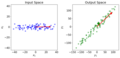 Core Idea of Partial Least Squares
 -
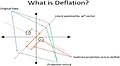 Deflation: The geometric interpretation of the deflation step in the PLS Algorithm


Sponsored Health Resource

W8MD Weight Loss, Sleep & MedSpa
Looking for physician-supervised weight loss, semaglutide, tirzepatide, or GLP-1 receptor agonist options? W8MD helps eligible patients in New York City, Brooklyn, New Jersey, Connecticut, Pennsylvania, Delaware, and greater Philadelphia with medical weight loss, sleep medicine, and long-term maintenance support.
GLP-1 specials: Affordable GLP-1 injections NYC and Philadelphia starting from $29.99/week and up for semaglutide with insurance accepted for qualifying visits, and $45/week and up for tirzepatide with insurance accepted for qualifying visits. Self-pay options start from $59.99/week and up for semaglutide and $69.99/week and up for tirzepatide.
Medical weight loss NYC | Affordable GLP-1 injections NYC | Budget GLP-1 weight loss shots Philadelphia | New Jersey medical weight loss | NYC medical weight loss | Philadelphia medical weight loss | Sleep clinic NYC | W8MD's Philadelphia GLP-1 doctor | Weight loss prescriptions NYC
Book a W8MD appointment · View GLP-1 specials
Paid promotional message. Eligibility, pricing, insurance coverage, medication availability, and results vary. Medical evaluation required.

Medical Disclaimer: WikiMD is for informational purposes only and is not a substitute for professional medical advice. Content may be inaccurate or outdated and should not be used for diagnosis or treatment. Always consult your healthcare provider for medical decisions. Verify information with trusted sources such as CDC.gov and NIH.gov. By using this site, you agree that WikiMD is not liable for any outcomes related to its content. See full disclaimer.
Credits:Most images are courtesy of Wikimedia commons, and templates, categories Wikipedia, licensed under CC BY SA or similar.
Translate page: - East Asian
中文,
日本,
한국어,
South Asian
हिन्दी,
தமிழ்,
తెలుగు,
Urdu,
ಕನ್ನಡ,
Southeast Asian
Indonesian,
Vietnamese,
Thai,
မြန်မာဘာသာ,
বাংলা
European
español,
Deutsch,
français,
Greek,
português do Brasil,
polski,
română,
русский,
Nederlands,
norsk,
svenska,
suomi,
Italian
Middle Eastern & African
عربى,
Turkish,
Persian,
Hebrew,
Afrikaans,
isiZulu,
Kiswahili,
Other
Bulgarian,
Hungarian,
Czech,
Swedish,
മലയാളം,
मराठी,
ਪੰਜਾਬੀ,
ગુજરાતી,
Portuguese,
Ukrainian

