Paregoric
Paregoric is a camphorated tincture of opium, a medication known for its analgesic, antidiarrheal, antitussive, and antispasmodic properties. It was historically used to treat a variety of ailments, including diarrhea, cough, and pain.
History[edit]
Paregoric was first known in the 17th century and was used over the centuries as a household remedy. The term "paregoric" comes from the Greek word "paregorikon," which means "speech" or "oration." This is because the medicine was originally used to soothe and calm those who were agitated or in pain.
Composition[edit]
Paregoric is a camphorated tincture of opium, which means it contains camphor and opium in a solution of alcohol. The opium is a powerful narcotic that can relieve pain and suppress coughs. The camphor acts as a mild local anesthetic and antispasmodic, which can help to relieve cramps and spasms in the muscles.
Uses[edit]
Paregoric has been used for a variety of medical conditions. It is most commonly used as an antidiarrheal, but it can also be used to treat coughs and pain. It can also be used to treat withdrawal symptoms in newborns who have been exposed to opioids while in the womb.
Side Effects[edit]
Like all medications, paregoric can have side effects. These can include drowsiness, nausea, vomiting, and constipation. In rare cases, it can cause severe allergic reactions.
Legal Status[edit]
The legal status of paregoric varies by country. In the United States, it is a Schedule III controlled substance, which means it has a moderate to low potential for physical and psychological dependence.
See Also[edit]

This WikiMD article can only be edited by registered and verified editors. You can log in or register.
-
 Old bottle of Paregoric, Circa 1940's
 -
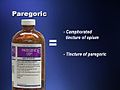 Paregoric


Advertise on WikiMD — 81,000+ full articles, ~900,000 total pages, ~250 million page views. Global reach, limited time promotional rates from $1/page/day. Learn more · View stats


Translate page: - East Asian
中文,
日本,
한국어,
South Asian
हिन्दी,
தமிழ்,
తెలుగు,
Urdu,
ಕನ್ನಡ,
Southeast Asian
Indonesian,
Vietnamese,
Thai,
မြန်မာဘာသာ,
বাংলা
European
español,
Deutsch,
français,
Greek,
português do Brasil,
polski,
română,
русский,
Nederlands,
norsk,
svenska,
suomi,
Italian
Middle Eastern & African
عربى,
Turkish,
Persian,
Hebrew,
Afrikaans,
isiZulu,
Kiswahili,
Other
Bulgarian,
Hungarian,
Czech,
Swedish,
മലയാളം,
मराठी,
ਪੰਜਾਬੀ,
ગુજરાતી,
Portuguese,
Ukrainian
About WikiMD • Contact • Disclaimer • Privacy • Copyright • Site statistics
Some content and images may originate from Wikimedia Commons or Wikipedia and remain subject to their stated licenses. Unless otherwise noted, eligible WikiMD content is available under CC BY-SA 4.0.
WikiMD Wellnesspedia — Free health & wellness information for patients, students, and health professionals.

