Pandemic H1N1/09 virus
Pandemic H1N1/09 virus is a novel influenza A virus subtype that was first identified in April 2009. This strain of the virus, often referred to as "swine flu", resulted in the 2009 flu pandemic. The virus is a unique combination of influenza virus genes never previously identified in either animals or people.
Origin[edit]
The Pandemic H1N1/09 virus is believed to have resulted from a reassortment of swine influenza, avian influenza, and human influenza viruses, possibly in pigs. The virus was first identified in two children in the United States in April 2009.
Symptoms[edit]
The symptoms of the Pandemic H1N1/09 virus are similar to those of the seasonal flu and can include fever, cough, sore throat, runny nose, body aches, headache, chills, and fatigue. Some people may also have vomiting and diarrhea.
Transmission[edit]
The virus is thought to spread mainly from person-to-person through the coughing or sneezing of infected people. It can also be contracted by touching a surface or object that has the virus on it and then touching the mouth or nose.
Prevention and Treatment[edit]
Prevention measures include frequent hand washing, avoiding close contact with sick individuals, and staying home when sick. Vaccines for the Pandemic H1N1/09 virus were made available in October 2009. Antiviral drugs can also be used to treat the illness.
Impact[edit]
The Pandemic H1N1/09 virus caused the first global pandemic in more than 40 years. It resulted in an estimated 151,700 to 575,400 deaths worldwide during the first year the virus circulated.
| Influenza | ||||||||||
|---|---|---|---|---|---|---|---|---|---|---|
|
 | This virus-related article is a stub. You can help WikiMD by expanding the page. |
-
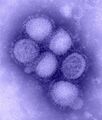 H1N1 Influenza Virus
 -
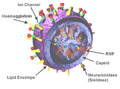 3D Model of Influenza Virus
 -
 2009 H1N1 Swine Flu Line
 -
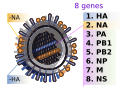 2009 H1N1 Influenza Virus Genetic Map


Sponsored Health Resource

W8MD Weight Loss, Sleep & MedSpa
Looking for physician-supervised weight loss, semaglutide, tirzepatide, or GLP-1 receptor agonist options? W8MD helps eligible patients in New York City, Brooklyn, New Jersey, Connecticut, Pennsylvania, Delaware, and greater Philadelphia with medical weight loss, sleep medicine, and long-term maintenance support.
GLP-1 specials: Affordable GLP-1 injections NYC and Philadelphia starting from $29.99/week and up for semaglutide with insurance accepted for qualifying visits, and $45/week and up for tirzepatide with insurance accepted for qualifying visits. Self-pay options start from $59.99/week and up for semaglutide and $69.99/week and up for tirzepatide.
- Medical weight loss NYC
- Affordable GLP-1 injections NYC
- Budget GLP-1 weight loss shots Philadelphia
- New Jersey medical weight loss
- NYC medical weight loss blog
- Philadelphia weight loss blog
- Sleep medicine and sleep apnea services
- W8MD MedSpa and wellness
Book a W8MD appointment · View GLP-1 specials
Paid promotional message. Eligibility, pricing, insurance coverage, medication availability, and results vary. Medical evaluation required.

Medical Disclaimer: WikiMD is for informational purposes only and is not a substitute for professional medical advice. Content may be inaccurate or outdated and should not be used for diagnosis or treatment. Always consult your healthcare provider for medical decisions. Verify information with trusted sources such as CDC.gov and NIH.gov. By using this site, you agree that WikiMD is not liable for any outcomes related to its content. See full disclaimer.
Credits:Most images are courtesy of Wikimedia commons, and templates, categories Wikipedia, licensed under CC BY SA or similar.
Translate page: - East Asian
中文,
日本,
한국어,
South Asian
हिन्दी,
தமிழ்,
తెలుగు,
Urdu,
ಕನ್ನಡ,
Southeast Asian
Indonesian,
Vietnamese,
Thai,
မြန်မာဘာသာ,
বাংলা
European
español,
Deutsch,
français,
Greek,
português do Brasil,
polski,
română,
русский,
Nederlands,
norsk,
svenska,
suomi,
Italian
Middle Eastern & African
عربى,
Turkish,
Persian,
Hebrew,
Afrikaans,
isiZulu,
Kiswahili,
Other
Bulgarian,
Hungarian,
Czech,
Swedish,
മലയാളം,
मराठी,
ਪੰਜਾਬੀ,
ગુજરાતી,
Portuguese,
Ukrainian

