Osteopathy
Osteopathy is a type of alternative medicine that emphasizes physical manipulation of muscle tissue and bones. Its name comes from Ancient Greek "bone" (ὀστέον) and "sensitive to" or "responding to" (-πάθεια).
History[edit]
Andrew Taylor Still (1828–1917) founded osteopathy in 1874. Still was a Missouri physician who had become disillusioned with the ineffective and often harmful practices of his day, such as purging, bleeding, and the use of toxic chemicals. He developed a theory that the human body contained its own remedies and could self-heal if the conditions were right, and that the role of the osteopath was to facilitate this process.
Principles[edit]
Osteopathy is based on four main principles:
- The body is an integrated unit of mind, body, and spirit.
- The body possesses self-regulatory mechanisms, having the inherent capacity to defend, repair, and remodel itself.
- Structure and function are reciprocally interrelated.
- Rational treatment is based on understanding the basic principles of body unity, self-regulation, and the interrelationship of structure and function.
Practice[edit]
Osteopaths use a wide range of techniques to treat their patients. These can include muscle energy technique, myofascial release, cranial osteopathy, joint manipulation, and exercise therapy. The choice of technique depends on the patient's individual needs and the osteopath's area of expertise.
Regulation and recognition[edit]
In many countries, including the United States and the United Kingdom, osteopathy is recognized as a health care profession. However, the scope of practice can vary widely between countries, and is often subject to specific national legislation.
Criticism and controversy[edit]
Osteopathy has been criticized for its lack of scientific evidence. Some techniques, such as cranial osteopathy, have been particularly controversial. Critics argue that these techniques are not based on sound scientific principles and can potentially cause harm.
See also[edit]
References[edit]

This WikiMD article can only be edited by registered and verified editors. You can log in or register.
Osteopathy[edit]
-
 Osteopathy Complete (1898)
 -
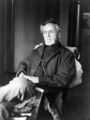 Andrew Taylor Still, 1914
 -
 Osteopathy
_(14756710206).jpg)


Medical Disclaimer: WikiMD is for informational purposes only and is not a substitute for professional medical advice. Content may be inaccurate or outdated and should not be used for diagnosis or treatment. Always consult your healthcare provider for medical decisions. Verify information with trusted sources such as CDC.gov and NIH.gov. By using this site, you agree that WikiMD is not liable for any outcomes related to its content. See full disclaimer.
Credits:Most images are courtesy of Wikimedia commons, and templates, categories Wikipedia, licensed under CC BY SA or similar.
Translate page: - East Asian
中文,
日本,
한국어,
South Asian
हिन्दी,
தமிழ்,
తెలుగు,
Urdu,
ಕನ್ನಡ,
Southeast Asian
Indonesian,
Vietnamese,
Thai,
မြန်မာဘာသာ,
বাংলা
European
español,
Deutsch,
français,
Greek,
português do Brasil,
polski,
română,
русский,
Nederlands,
norsk,
svenska,
suomi,
Italian
Middle Eastern & African
عربى,
Turkish,
Persian,
Hebrew,
Afrikaans,
isiZulu,
Kiswahili,
Other
Bulgarian,
Hungarian,
Czech,
Swedish,
മലയാളം,
मराठी,
ਪੰਜਾਬੀ,
ગુજરાતી,
Portuguese,
Ukrainian

