Oral microbiology
Oral Microbiology is the study of the microorganisms (microbiota) that live in the human mouth. The environment present in the human mouth allows the growth of characteristic microorganisms found there. It provides a source of water and nutrients, as well as a moderate temperature. Resident microbes of the mouth adhere to the teeth and gums to resist mechanical flushing from the mouth to stomach where acid-sensitive microbes are destroyed by hydrochloric acid.
Oral Bacteria[edit]
The human mouth contains a diverse variety of microorganisms. The bacteria in the mouth form a complex, generally beneficial ecosystem known as the oral microbiota with various fungi, protozoa, viruses, and live in or on the body's surfaces. The oral cavity has the potential to harbor at least 600 different bacterial species, and in any given patient, more than 150 species may be present, bacteria such as streptococci, lactobacilli, staphylococci, corynebacteria, and various others depending on the individual's oral hygiene.
Oral Disease[edit]
Oral bacteria have been implicated in various diseases including Oral Cavity Diseases, Dental caries, Periodontal disease, Tooth decay, and even Heart disease. These diseases can be managed or prevented through regular oral hygiene and dental visits.
Oral Hygiene[edit]
Oral hygiene is the practice of keeping the mouth clean and is a means of preventing dental caries, gingivitis, periodontal disease, bad breath, and other dental disorders. It consists of both professional and personal care. Regular oral hygiene aids in the prevention of oral diseases.
See Also[edit]
References[edit]

This WikiMD article can only be edited by registered and verified editors. You can log in or register.
 | This dentistry article is a stub. You can help WikiMD by expanding the page. |
-
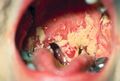 Oral thrush caused by Candida albicans
 -
Oral microbiology


Medical Disclaimer: WikiMD is for informational purposes only and is not a substitute for professional medical advice. Content may be inaccurate or outdated and should not be used for diagnosis or treatment. Always consult your healthcare provider for medical decisions. Verify information with trusted sources such as CDC.gov and NIH.gov. By using this site, you agree that WikiMD is not liable for any outcomes related to its content. See full disclaimer.
Credits:Most images are courtesy of Wikimedia commons, and templates, categories Wikipedia, licensed under CC BY SA or similar.
Translate page: - East Asian
中文,
日本,
한국어,
South Asian
हिन्दी,
தமிழ்,
తెలుగు,
Urdu,
ಕನ್ನಡ,
Southeast Asian
Indonesian,
Vietnamese,
Thai,
မြန်မာဘာသာ,
বাংলা
European
español,
Deutsch,
français,
Greek,
português do Brasil,
polski,
română,
русский,
Nederlands,
norsk,
svenska,
suomi,
Italian
Middle Eastern & African
عربى,
Turkish,
Persian,
Hebrew,
Afrikaans,
isiZulu,
Kiswahili,
Other
Bulgarian,
Hungarian,
Czech,
Swedish,
മലയാളം,
मराठी,
ਪੰਜਾਬੀ,
ગુજરાતી,
Portuguese,
Ukrainian

