Optical aberration
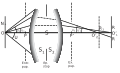
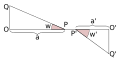
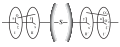
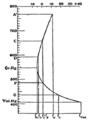
Optical aberration refers to the deviation of light in an optical system, such as a lens, away from the behavior predicted by the simplified Gaussian optics. The term "aberration" has been used to describe a number of phenomena which differ in many respects.
Types of Aberrations[edit]
There are two main types of aberrations: monochromatic and chromatic.
Monochromatic Aberrations[edit]
Monochromatic aberrations occur even when the incoming light is of a single color. They are caused by the geometry of the lens or mirror and occur both when light is reflected and when it is refracted. They are typically subdivided into five types: Spherical aberration, Coma, Astigmatism, Curvature of field, and Distortion.
Chromatic Aberrations[edit]
Chromatic aberrations are caused by the dispersion of the lens material, the variation of its refractive index n with the wavelength of light. They do not occur in mirrors. They are typically subdivided into two types: Longitudinal chromatic aberration and Transverse chromatic aberration.
History[edit]
The study of optical aberrations dates back to the 17th century, with notable contributions from scientists such as Isaac Newton and Christiaan Huygens. The development of the achromatic lens, which corrects for chromatic aberration, was a major step forward in optical technology.
Correction of Aberrations[edit]
Various methods have been developed to correct for optical aberrations. These include the use of aspheric lenses, achromatic lenses, and apochromatic lenses, as well as advanced techniques such as adaptive optics.
See Also[edit]
References[edit]

This WikiMD article can only be edited by registered and verified editors. You can log in or register.
-
Optical_aberration
-
Optical_aberration
-
 Optical_aberration
 -
 Optical_aberration
 -
Optical_aberration
-
Optical_aberration
-
 Optical_aberration
 -
Optical_aberration
-
Optical_aberration
-
 Optical_aberration
 -
Optical_aberration
-
 Optical_aberration


Medical Disclaimer: WikiMD is for informational purposes only and is not a substitute for professional medical advice. Content may be inaccurate or outdated and should not be used for diagnosis or treatment. Always consult your healthcare provider for medical decisions. Verify information with trusted sources such as CDC.gov and NIH.gov. By using this site, you agree that WikiMD is not liable for any outcomes related to its content. See full disclaimer.
Credits:Most images are courtesy of Wikimedia commons, and templates, categories Wikipedia, licensed under CC BY SA or similar.
Translate page: - East Asian
中文,
日本,
한국어,
South Asian
हिन्दी,
தமிழ்,
తెలుగు,
Urdu,
ಕನ್ನಡ,
Southeast Asian
Indonesian,
Vietnamese,
Thai,
မြန်မာဘာသာ,
বাংলা
European
español,
Deutsch,
français,
Greek,
português do Brasil,
polski,
română,
русский,
Nederlands,
norsk,
svenska,
suomi,
Italian
Middle Eastern & African
عربى,
Turkish,
Persian,
Hebrew,
Afrikaans,
isiZulu,
Kiswahili,
Other
Bulgarian,
Hungarian,
Czech,
Swedish,
മലയാളം,
मराठी,
ਪੰਜਾਬੀ,
ગુજરાતી,
Portuguese,
Ukrainian


.svg)


