Operant conditioning
Operant conditioning, also known as instrumental conditioning, is a type of learning in which an individual's behavior is modified by its consequences; the behaviour may change in form, frequency, or strength. Operant conditioning is distinguished from classical conditioning (also known as Pavlovian or respondent conditioning) in that operant conditioning deals with the modification of "voluntary behaviour" or operant behaviour.
History[edit]
The term 'operant conditioning' was introduced by B.F. Skinner in order to indicate that, in his experimental paradigm, the organism is free to operate on the environment. In this paradigm, the experimenter cannot trigger the desirable response; the experimenter waits for the response to occur (to be emitted by the organism) and then a potential reinforcer is delivered.
Concepts[edit]
Operant conditioning is a process that attempts to modify behaviour through the use of positive and negative reinforcement. Through operant conditioning, an individual makes an association between a particular behavior and a consequence.
Reinforcement[edit]
Reinforcement is any event that strengthens or increases the behavior it follows. There are two types of reinforcement: positive and negative.
Positive reinforcement[edit]
Positive reinforcement is a process that strengthens the likelihood of a particular response by adding a stimulus after the behavior is performed.
Negative reinforcement[edit]
Negative reinforcement is a response or behavior is strengthened by stopping, removing, or avoiding a negative outcome or aversive stimulus.
Punishment[edit]
Punishment is the application of an aversive stimulus/event (positive punishment or punishment by contingent stimulation) or the removal of a desirable stimulus (negative punishment or punishment by contingent withdrawal).
Applications[edit]
Operant conditioning has been widely applied in clinical settings (i.e., behavior modification) as well as teaching settings and instructional design.
See also[edit]
References[edit]
External links[edit]

This WikiMD article can only be edited by registered and verified editors. You can log in or register.
-
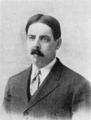 Edward Lee Thorndike
 -
B.F. Skinner at Harvard circa 1950


Medical Disclaimer: WikiMD is for informational purposes only and is not a substitute for professional medical advice. Content may be inaccurate or outdated and should not be used for diagnosis or treatment. Always consult your healthcare provider for medical decisions. Verify information with trusted sources such as CDC.gov and NIH.gov. By using this site, you agree that WikiMD is not liable for any outcomes related to its content. See full disclaimer.
Credits:Most images are courtesy of Wikimedia commons, and templates, categories Wikipedia, licensed under CC BY SA or similar.
Translate page: - East Asian
中文,
日本,
한국어,
South Asian
हिन्दी,
தமிழ்,
తెలుగు,
Urdu,
ಕನ್ನಡ,
Southeast Asian
Indonesian,
Vietnamese,
Thai,
မြန်မာဘာသာ,
বাংলা
European
español,
Deutsch,
français,
Greek,
português do Brasil,
polski,
română,
русский,
Nederlands,
norsk,
svenska,
suomi,
Italian
Middle Eastern & African
عربى,
Turkish,
Persian,
Hebrew,
Afrikaans,
isiZulu,
Kiswahili,
Other
Bulgarian,
Hungarian,
Czech,
Swedish,
മലയാളം,
मराठी,
ਪੰਜਾਬੀ,
ગુજરાતી,
Portuguese,
Ukrainian


