Ontario
Ontario is one of the thirteen provinces and territories of Canada. Located in east-central Canada, it is Canada's most populous province, with 38.3 percent of the country's population, and is the second-largest province in total area. Ontario is fourth-largest in total area when the territories of the Northwest Territories and Nunavut are included. It is home to the nation's capital city, Ottawa, and the nation's most populous city, Toronto.
Geography[edit]
Ontario is bordered by the province of Manitoba to the west, Hudson Bay and James Bay to the north, and Quebec to the east and northeast, and to the south by the U.S. states of Minnesota, Michigan, Ohio, Pennsylvania, and New York. Almost all of Ontario's 2,700 km (1,678 mi) border with the United States follows inland waterways: from the westerly Lake of the Woods, eastward along the major rivers and lakes of the Great Lakes/Saint Lawrence River drainage system. These include Rainy River, Pigeon River, Lake Superior, St. Marys River, Lake Huron, St. Clair River, Lake St. Clair, Detroit River, Lake Erie, Niagara River, Lake Ontario and along the St. Lawrence River from Kingston to the Quebec boundary just east of Cornwall.
History[edit]
The history of Ontario covers the period from the arrival of Paleo-Indians thousands of years ago to the present day. The lands that make up present-day Ontario, the most populous province of Canada as of the early 21st century, have been inhabited for millennia by groups of Aboriginal peoples, with French and British exploration and colonization commencing in the 17th century.
Economy[edit]
Ontario is Canada's leading manufacturing province, accounting for 52% of the total national manufacturing shipments in 2004. Ontario's largest trading partner is the American state of Michigan. As of April 2012, Moody's bond-rating agency rated Ontario debt at AA2/stable, while S&P rated it AA-. Dominion Bond Rating Service rated it AA(low) in January 2013. Long known as a bastion of Canadian manufacturing and financial solvency, Ontario's public debt-to-GDP ratio is projected to be 38.4% in fiscal year 2023–2024.
Demographics[edit]
According to the 2016 Canadian Census, the province has a population of 13,448,494. The population is urbanized, with 81.4% of the population residing in cities and towns. The largest population centres are Toronto, Ottawa, Hamilton, Kitchener, London, and Oshawa.
Government and politics[edit]
The Government of Ontario includes the cabinet of the province and the non-political civil service. The current premier is Doug Ford, who was sworn in on June 29, 2018. The Legislative Assembly of Ontario is located in the Ontario Legislative Building in Toronto. The Lieutenant Governor of Ontario, the Queen's representative in the province, carries out most of the royal duties in Ontario.
Education[edit]
Education in Ontario comprises public and private primary and secondary schools and post-secondary institutions. By right of the constitution of Canada, Roman Catholics are entitled to their own school system. Four large, overlapping publicly funded school systems provide primary and secondary education, organized into school districts.
Culture[edit]
Ontario's culture has been shaped by its history, geography, and politics. The province has a rich heritage of Aboriginal, French, British, and many other cultures. The province is home to the National Gallery of Canada, the Royal Ontario Museum, and the Ontario Science Centre.
.svg) | This Canada-related article is a stub. You can help Wikipedia by adding missing information. |


 | This article about the economy is a stub. You can help Wikipedia by adding missing information. |
 | This article about politics is a stub. You can help Wikipedia by adding missing information. |

 | This culture-related article is a stub. You can help Wikipedia by adding missing information. |
-
 Black River
 -
 Ontario Köppen Climate Classification
 -
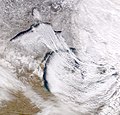 Lake Effect Snow on Earth
 -
 1755 Bellin Map of the Great Lakes
 -
 United Empire Loyalist Statue in Hamilton, Ontario
 -
 1811 Map of Upper and Lower Canada
 -
 Push on, brave York volunteers
 -
 1855 Colton Map of Upper Canada or Ontario
 -
 Canada Provinces Evolution
 -
 Oliver Mowat
 -
 Raid at Elk Lake
 -
 Ontario Population Density 2021


.jpg)


Ad. Transform your health with W8MD Weight Loss, Sleep & MedSpa

Tired of being overweight?
Special offer:
Budget GLP-1 weight loss medications
- Semaglutide starting from $29.99/week and up with insurance for visit of $59.99 and up per week self pay.
- Tirzepatide starting from $45.00/week and up (dose dependent) or $69.99/week and up self pay
✔ Same-week appointments, evenings & weekends ✔ Tele visits available with certain limitations Learn more:
- GLP-1 weight loss clinic NYC
- W8MD's NYC medical weight loss
- W8MD Philadelphia GLP-1 shots
- Philadelphia GLP-1 injections
- Affordable GLP-1 shots NYC
- Budget GLP-1 shots
|
WikiMD Medical Encyclopedia |
Medical Disclaimer: WikiMD is for informational purposes only and is not a substitute for professional medical advice. Content may be inaccurate or outdated and should not be used for diagnosis or treatment. Always consult your healthcare provider for medical decisions. Verify information with trusted sources such as CDC.gov and NIH.gov. By using this site, you agree that WikiMD is not liable for any outcomes related to its content. See full disclaimer.
Credits:Most images are courtesy of Wikimedia commons, and templates, categories Wikipedia, licensed under CC BY SA or similar.
Translate this page: - East Asian
中文,
日本,
한국어,
South Asian
हिन्दी,
தமிழ்,
తెలుగు,
Urdu,
ಕನ್ನಡ,
Southeast Asian
Indonesian,
Vietnamese,
Thai,
မြန်မာဘာသာ,
বাংলা
European
español,
Deutsch,
français,
Greek,
português do Brasil,
polski,
română,
русский,
Nederlands,
norsk,
svenska,
suomi,
Italian
Middle Eastern & African
عربى,
Turkish,
Persian,
Hebrew,
Afrikaans,
isiZulu,
Kiswahili,
Other
Bulgarian,
Hungarian,
Czech,
Swedish,
മലയാളം,
मराठी,
ਪੰਜਾਬੀ,
ગુજરાતી,
Portuguese,
Ukrainian
