Onion cake
Onion Cake is a savory dish that is popular in various cuisines around the world. It is typically made from onions, flour, eggs, and seasonings, and is often served as a side dish or appetizer.
Origins and History[edit]
The origins of the Onion Cake are not entirely clear, but it is believed to have been first made in the regions of Asia, particularly in China and Korea. In these countries, it is often served as a street food or as part of a larger meal. Over time, the dish has spread to other parts of the world and has been adapted to suit local tastes and ingredients.
Preparation and Variations[edit]
The basic recipe for Onion Cake involves mixing chopped onions with flour, eggs, and seasonings to form a batter. This is then fried or baked until golden brown. Variations of the recipe may include additional ingredients such as cheese, herbs, or other vegetables.
In Germany, a version of the Onion Cake known as Zwiebelkuchen is popular. This is a yeast dough topped with onions, bacon, cream, and caraway seeds, and is traditionally served in the autumn with new wine.
In Taiwan, the Onion Cake is often made with scallions and is known as Scallion Pancake. This version is typically served with a dipping sauce made from soy sauce and vinegar.
Cultural Significance[edit]
In many cultures, the Onion Cake is more than just a food item. It is often associated with specific traditions or celebrations. For example, in Germany, the Zwiebelkuchen is traditionally served during the Wine Harvest Festival to celebrate the new wine.
Health Benefits and Concerns[edit]
Onion Cake is a source of several important nutrients, including dietary fiber, vitamin C, and certain B vitamins. However, it can also be high in fat and calories, particularly if it is fried or contains a lot of cheese or other high-fat ingredients.
See Also[edit]

-
 Onion cake
 -
 Onion cake
 -
 Onion cake
 -
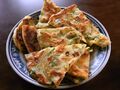 Onion cake
 -
 Onion cake


Medical Disclaimer: WikiMD is for informational purposes only and is not a substitute for professional medical advice. Content may be inaccurate or outdated and should not be used for diagnosis or treatment. Always consult your healthcare provider for medical decisions. Verify information with trusted sources such as CDC.gov and NIH.gov. By using this site, you agree that WikiMD is not liable for any outcomes related to its content. See full disclaimer.
Credits:Most images are courtesy of Wikimedia commons, and templates, categories Wikipedia, licensed under CC BY SA or similar.
Translate page: - East Asian
中文,
日本,
한국어,
South Asian
हिन्दी,
தமிழ்,
తెలుగు,
Urdu,
ಕನ್ನಡ,
Southeast Asian
Indonesian,
Vietnamese,
Thai,
မြန်မာဘာသာ,
বাংলা
European
español,
Deutsch,
français,
Greek,
português do Brasil,
polski,
română,
русский,
Nederlands,
norsk,
svenska,
suomi,
Italian
Middle Eastern & African
عربى,
Turkish,
Persian,
Hebrew,
Afrikaans,
isiZulu,
Kiswahili,
Other
Bulgarian,
Hungarian,
Czech,
Swedish,
മലയാളം,
मराठी,
ਪੰਜਾਬੀ,
ગુજરાતી,
Portuguese,
Ukrainian

