Old-fashioned doughnut
The Old-fashioned doughnut is a variety of doughnut (or donut), a popular sweet treat enjoyed worldwide. This type of doughnut is characterized by its ring shape, fluted edges, and a crisp exterior, which sets it apart from other doughnut varieties.
History[edit]
The Old-fashioned doughnut has its roots in the United States, with the first known recipes appearing in the mid-19th century. The name "Old-fashioned" was coined to differentiate this style of doughnut from the more modern, machine-produced varieties that began to dominate the market in the 20th century.
Preparation and Characteristics[edit]
Old-fashioned doughnuts are typically made from a sweet, yeast-based dough that includes ingredients such as milk, sugar, butter, eggs, and flour. The dough is rolled out and cut into rings, then deep-fried until golden brown. The fluted edges of the doughnut are created by a special doughnut cutter, which gives the Old-fashioned its distinctive appearance.
The doughnuts are often glazed with a simple sugar icing, but can also be dusted with powdered sugar or topped with a variety of other sweet toppings. The texture of an Old-fashioned doughnut is denser and cake-like compared to other doughnuts, with a slightly crunchy exterior due to the frying process.
Variations[edit]
There are several variations of the Old-fashioned doughnut, including the sour cream doughnut, which includes sour cream in the dough for a tangier flavor, and the chocolate doughnut, which is made with cocoa powder for a rich, chocolatey taste.
In Popular Culture[edit]
Old-fashioned doughnuts have been featured in numerous films, television shows, and books, often as a symbol of comfort and nostalgia. They are also a staple in many doughnut shops and bakeries across the United States and around the world.
See Also[edit]
References[edit]

-
 Old-fashioned doughnuts
 -
 Old-fashioned doughnut
 -
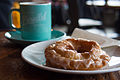 Old-fashioned doughnut
 -
 Old-fashioned doughnuts from Lucky's
 -
 Orange & pistachio old-fashioned doughnut


Medical Disclaimer: WikiMD is for informational purposes only and is not a substitute for professional medical advice. Content may be inaccurate or outdated and should not be used for diagnosis or treatment. Always consult your healthcare provider for medical decisions. Verify information with trusted sources such as CDC.gov and NIH.gov. By using this site, you agree that WikiMD is not liable for any outcomes related to its content. See full disclaimer.
Credits:Most images are courtesy of Wikimedia commons, and templates, categories Wikipedia, licensed under CC BY SA or similar.
Translate page: - East Asian
中文,
日本,
한국어,
South Asian
हिन्दी,
தமிழ்,
తెలుగు,
Urdu,
ಕನ್ನಡ,
Southeast Asian
Indonesian,
Vietnamese,
Thai,
မြန်မာဘာသာ,
বাংলা
European
español,
Deutsch,
français,
Greek,
português do Brasil,
polski,
română,
русский,
Nederlands,
norsk,
svenska,
suomi,
Italian
Middle Eastern & African
عربى,
Turkish,
Persian,
Hebrew,
Afrikaans,
isiZulu,
Kiswahili,
Other
Bulgarian,
Hungarian,
Czech,
Swedish,
മലയാളം,
मराठी,
ਪੰਜਾਬੀ,
ગુજરાતી,
Portuguese,
Ukrainian

