Oedipus complex
Oedipus complex is a term coined by Sigmund Freud, the founder of psychoanalysis, to describe a child's feelings of desire for his or her opposite-sex parent and jealousy and rivalry with his or her same-sex parent. The term derives from the Greek myth of Oedipus, who unknowingly kills his father, Laius, and marries his mother, Jocasta.
Overview[edit]
The Oedipus complex occurs during the Phallic stage of psychosexual development between the ages of three and five. Freud believed that during this stage, the child's libido (sexual energy) centers on the genital area. The child becomes aware of anatomical sex differences, which sets in motion the conflict between erotic attraction, resentment, rivalry, jealousy and fear.
Freud's Theory[edit]
Freud proposed that the Oedipus complex was a universal phenomenon, inherent in the innate sexual drives of all humans. He believed that it was the primary cause of a number of critical stages in individual development, leading to the development of key aspects of personality. Freud's theory has been criticized and revised by several psychoanalysts, including Carl Jung and Jacques Lacan.
Criticism and Controversy[edit]
The Oedipus complex is one of the most controversial of Freud's theories. Critics argue that Freud's theory is overly focused on sexuality and is based on his own personal experiences and observations rather than empirical evidence. Some also argue that the Oedipus complex is not universal and does not account for cultural differences in family structures and values.
See Also[edit]
References[edit]
|
Part of a series of articles on |
|
[[File: |
|
Concepts |
|
Important figures |
|
Important works |
|
|
Schools of thought |
|
Training |
|
See also |
|
|
.jpeg)
| Freudian Psychology | ||||||||||
|---|---|---|---|---|---|---|---|---|---|---|
This Freudian psychology related article is a stub.
|
-
 Oedipus and the Sphinx by Ingres
 -
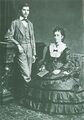 Amalia Freud
 -
 Oedipus and the Sphinx (MET)
 -
 Electra and Orestes
 -
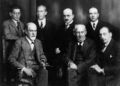 Freud and other psychoanalysts, 1922


Medical Disclaimer: WikiMD is for informational purposes only and is not a substitute for professional medical advice. Content may be inaccurate or outdated and should not be used for diagnosis or treatment. Always consult your healthcare provider for medical decisions. Verify information with trusted sources such as CDC.gov and NIH.gov. By using this site, you agree that WikiMD is not liable for any outcomes related to its content. See full disclaimer.
Credits:Most images are courtesy of Wikimedia commons, and templates, categories Wikipedia, licensed under CC BY SA or similar.
Translate page: - East Asian
中文,
日本,
한국어,
South Asian
हिन्दी,
தமிழ்,
తెలుగు,
Urdu,
ಕನ್ನಡ,
Southeast Asian
Indonesian,
Vietnamese,
Thai,
မြန်မာဘာသာ,
বাংলা
European
español,
Deutsch,
français,
Greek,
português do Brasil,
polski,
română,
русский,
Nederlands,
norsk,
svenska,
suomi,
Italian
Middle Eastern & African
عربى,
Turkish,
Persian,
Hebrew,
Afrikaans,
isiZulu,
Kiswahili,
Other
Bulgarian,
Hungarian,
Czech,
Swedish,
മലയാളം,
मराठी,
ਪੰਜਾਬੀ,
ગુજરાતી,
Portuguese,
Ukrainian

