Ochratoxin A
Ochratoxin A (OTA) is a mycotoxin produced by certain species of Aspergillus and Penicillium fungi. It is a potent toxin known for its nephrotoxic, immunotoxic, and carcinogenic effects in animals and is a suspected human carcinogen. OTA contamination can occur in a variety of food products, including cereals, coffee, dried fruit, and wine, posing a significant risk to human health.
Sources and Exposure[edit]
OTA is primarily produced by Aspergillus ochraceus, Aspergillus carbonarius, and Penicillium verrucosum. These fungi can contaminate agricultural commodities either in the field or during storage, under conditions of high humidity and temperature. Human exposure to OTA is mainly through the consumption of contaminated food products, although occupational exposure can also occur in agricultural and food processing environments.
Health Effects[edit]
The health effects of OTA are diverse, affecting multiple organ systems. The kidney is the primary target organ in animals, with OTA causing both acute and chronic nephropathy. In humans, it is associated with an increased risk of Balkan Endemic Nephropathy (BEN) and possibly certain types of cancer, particularly renal cell carcinoma. OTA is also immunosuppressive, reducing the body's ability to fight infections and other diseases.
Nephrotoxicity[edit]
OTA's nephrotoxic effects are well-documented, leading to tubular dysfunction and renal failure in severe cases. The toxin interferes with cellular processes in the kidney, inducing oxidative stress and apoptosis.
Carcinogenicity[edit]
The International Agency for Research on Cancer (IARC) has classified OTA as a Group 2B carcinogen, meaning it is possibly carcinogenic to humans. Animal studies have shown OTA to cause tumors in the kidney and liver, but direct evidence in humans is limited.
Immunotoxicity[edit]
OTA suppresses the immune system by inhibiting the proliferation of lymphocytes and impairing macrophage function. This immunosuppression can increase susceptibility to infectious diseases and reduce the efficacy of vaccinations.
Detection and Control[edit]
Efforts to control OTA contamination focus on preventing fungal growth on crops through good agricultural and storage practices. Detection of OTA in food products is typically performed using chromatographic techniques, such as high-performance liquid chromatography (HPLC), often coupled with mass spectrometry (MS) for increased sensitivity and specificity.
Regulatory Standards[edit]
Due to its toxicity, many countries have established maximum residue limits (MRLs) for OTA in food products. These limits vary by country and food type, reflecting differences in dietary habits and risk assessments.
Conclusion[edit]
Ochratoxin A is a significant food safety concern due to its potential health effects, including nephrotoxicity, carcinogenicity, and immunotoxicity. Preventing OTA contamination through proper agricultural and storage practices is essential for protecting public health. Ongoing research into OTA's mechanisms of toxicity and improved detection methods will aid in mitigating its risks.

Ochratoxin_A[edit]
-
 Ochratoxin A structure
 -
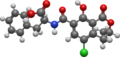 Ochratoxin A 3D model


Medical Disclaimer: WikiMD is for informational purposes only and is not a substitute for professional medical advice. Content may be inaccurate or outdated and should not be used for diagnosis or treatment. Always consult your healthcare provider for medical decisions. Verify information with trusted sources such as CDC.gov and NIH.gov. By using this site, you agree that WikiMD is not liable for any outcomes related to its content. See full disclaimer.
Credits:Most images are courtesy of Wikimedia commons, and templates, categories Wikipedia, licensed under CC BY SA or similar.
Translate page: - East Asian
中文,
日本,
한국어,
South Asian
हिन्दी,
தமிழ்,
తెలుగు,
Urdu,
ಕನ್ನಡ,
Southeast Asian
Indonesian,
Vietnamese,
Thai,
မြန်မာဘာသာ,
বাংলা
European
español,
Deutsch,
français,
Greek,
português do Brasil,
polski,
română,
русский,
Nederlands,
norsk,
svenska,
suomi,
Italian
Middle Eastern & African
عربى,
Turkish,
Persian,
Hebrew,
Afrikaans,
isiZulu,
Kiswahili,
Other
Bulgarian,
Hungarian,
Czech,
Swedish,
മലയാളം,
मराठी,
ਪੰਜਾਬੀ,
ગુજરાતી,
Portuguese,
Ukrainian

