Obturator veins
Obturator veins are a pair of veins that accompany the obturator artery in the pelvis. They are responsible for draining blood from the pelvic muscles and bones. The term "obturator" is derived from the Latin word "obturare," which means "to stop up" or "to close."
Anatomy[edit]
The obturator veins originate from the venous plexus on the sides of the pelvic cavity. They run along the obturator canal, a narrow passage in the lower part of the pelvis, and drain into the internal iliac vein. The obturator veins are accompanied by the obturator artery and obturator nerve, forming the obturator bundle.
Function[edit]
The primary function of the obturator veins is to drain deoxygenated blood from the pelvic muscles and bones. They also play a role in the venous return from the lower extremities.
Clinical significance[edit]
In some cases, the obturator veins can become varicose, leading to obturator vein varicosities. This condition is often associated with pelvic congestion syndrome, a chronic medical condition in women caused by varicose veins in the lower abdomen. The condition can cause chronic pelvic pain, dyspareunia (pain during sexual intercourse), and lower back pain.
See also[edit]
References[edit]

This WikiMD article can only be edited by registered and verified editors. You can log in or register.
Obturator_veins[edit]
-
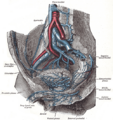 Obturator_veins
 -
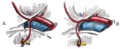 Obturator_veins
 -
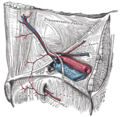 Obturator_veins
 -
 Obturator_veins


Medical Disclaimer: WikiMD is for informational purposes only and is not a substitute for professional medical advice. Content may be inaccurate or outdated and should not be used for diagnosis or treatment. Always consult your healthcare provider for medical decisions. Verify information with trusted sources such as CDC.gov and NIH.gov. By using this site, you agree that WikiMD is not liable for any outcomes related to its content. See full disclaimer.
Credits:Most images are courtesy of Wikimedia commons, and templates, categories Wikipedia, licensed under CC BY SA or similar.
Translate page: - East Asian
中文,
日本,
한국어,
South Asian
हिन्दी,
தமிழ்,
తెలుగు,
Urdu,
ಕನ್ನಡ,
Southeast Asian
Indonesian,
Vietnamese,
Thai,
မြန်မာဘာသာ,
বাংলা
European
español,
Deutsch,
français,
Greek,
português do Brasil,
polski,
română,
русский,
Nederlands,
norsk,
svenska,
suomi,
Italian
Middle Eastern & African
عربى,
Turkish,
Persian,
Hebrew,
Afrikaans,
isiZulu,
Kiswahili,
Other
Bulgarian,
Hungarian,
Czech,
Swedish,
മലയാളം,
मराठी,
ਪੰਜਾਬੀ,
ગુજરાતી,
Portuguese,
Ukrainian

