Nuchal ligament
The Nuchal Ligament is a significant anatomical structure in the posterior aspect of the neck. It is a well-defined, thick, elastic, fibrous band that extends from the external occipital protuberance and median nuchal line to the spinous process of the seventh cervical vertebra, also known as the vertebra prominens.
Etymology[edit]
The term "nuchal" is derived from the Latin word "nucha," which means "nape" or "back of the neck."
Anatomy[edit]
The Nuchal Ligament is composed of two parts: the Funnel Ligament and the Supraspinous Ligament. The Funnel Ligament is the upper part that attaches to the skull, while the Supraspinous Ligament is the lower part that extends down the spine.
Function[edit]
The primary function of the Nuchal Ligament is to sustain the weight of the head and facilitate its movements. It also serves as a site for muscle attachment, including the Trapezius Muscle, Rhomboid Muscle, and Splenius Capitis Muscle.
Clinical Significance[edit]
In the medical field, the Nuchal Ligament is often examined in cases of neck pain and injury. It can be affected by conditions such as Whiplash, Ankylosing Spondylitis, and Rheumatoid Arthritis.
Meat Industry[edit]
In the meat industry, the Nuchal Ligament is often removed from slaughtered animals due to its tough and inedible nature. It is particularly prominent in bovines, making it a significant consideration in beef processing.
Related Terms[edit]
- Ligament: A fibrous connective tissue that connects bones to other bones.
- Cervical Vertebrae: The seven vertebrae that form the neck.
- Occipital Bone: The bone that forms the back and base of the skull.

This WikiMD article can only be edited by registered and verified editors. You can log in or register.
Nuchal_ligament[edit]
-
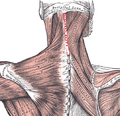 Nuchal ligament
 -
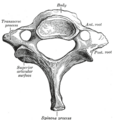 Ligaments of the vertebral column
 -
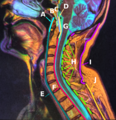 Sagittal MRI of the neck
 -
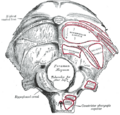 Muscles of the neck
 -
Anatomy of the neck


Medical Disclaimer: WikiMD is for informational purposes only and is not a substitute for professional medical advice. Content may be inaccurate or outdated and should not be used for diagnosis or treatment. Always consult your healthcare provider for medical decisions. Verify information with trusted sources such as CDC.gov and NIH.gov. By using this site, you agree that WikiMD is not liable for any outcomes related to its content. See full disclaimer.
Credits:Most images are courtesy of Wikimedia commons, and templates, categories Wikipedia, licensed under CC BY SA or similar.
Translate page: - East Asian
中文,
日本,
한국어,
South Asian
हिन्दी,
தமிழ்,
తెలుగు,
Urdu,
ಕನ್ನಡ,
Southeast Asian
Indonesian,
Vietnamese,
Thai,
မြန်မာဘာသာ,
বাংলা
European
español,
Deutsch,
français,
Greek,
português do Brasil,
polski,
română,
русский,
Nederlands,
norsk,
svenska,
suomi,
Italian
Middle Eastern & African
عربى,
Turkish,
Persian,
Hebrew,
Afrikaans,
isiZulu,
Kiswahili,
Other
Bulgarian,
Hungarian,
Czech,
Swedish,
മലയാളം,
मराठी,
ਪੰਜਾਬੀ,
ગુજરાતી,
Portuguese,
Ukrainian


