Nonbenzodiazepine
Nonbenzodiazepines are a class of psychoactive drugs that are very similar to benzodiazepines, but have different chemical structures. They are used in the treatment of various disorders such as insomnia, anxiety, and seizures. Nonbenzodiazepines are also known as "Z-drugs".
History[edit]
Nonbenzodiazepines were first developed in the 1980s as an alternative to benzodiazepines, which were associated with a high risk of dependency and withdrawal symptoms. The first nonbenzodiazepine to be developed was zopiclone, which was introduced in 1986.
Pharmacology[edit]
Nonbenzodiazepines work by binding to the same receptors in the brain as benzodiazepines, the GABA_A receptor. However, they bind to a different part of the receptor, which is why they have different effects and side effects. Nonbenzodiazepines are generally considered to be less addictive than benzodiazepines, but they can still cause dependency and withdrawal symptoms if used for a long time or at high doses.
Uses[edit]
Nonbenzodiazepines are primarily used to treat insomnia. They can help people fall asleep faster, stay asleep longer, and reduce the number of times they wake up during the night. Some nonbenzodiazepines, such as eszopiclone, can also be used to treat anxiety. However, they are not usually the first choice for this purpose, as there are other drugs that are more effective and have fewer side effects.
Side effects[edit]
The most common side effects of nonbenzodiazepines are drowsiness, dizziness, and a feeling of being "drugged". Other side effects can include memory problems, hallucinations, and changes in behavior. In rare cases, nonbenzodiazepines can cause severe allergic reactions.
See also[edit]
References[edit]

This WikiMD article can only be edited by registered and verified editors. You can log in or register.
-
 Zolpidem structure
 -
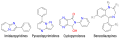 Core structures of nonbenzodiazepines


Advertise on WikiMD — 81,000+ full articles, ~900,000 total pages, ~250 million page views. Global reach, limited time promotional rates from $1/page/day. Learn more · View stats


Translate page: - East Asian
中文,
日本,
한국어,
South Asian
हिन्दी,
தமிழ்,
తెలుగు,
Urdu,
ಕನ್ನಡ,
Southeast Asian
Indonesian,
Vietnamese,
Thai,
မြန်မာဘာသာ,
বাংলা
European
español,
Deutsch,
français,
Greek,
português do Brasil,
polski,
română,
русский,
Nederlands,
norsk,
svenska,
suomi,
Italian
Middle Eastern & African
عربى,
Turkish,
Persian,
Hebrew,
Afrikaans,
isiZulu,
Kiswahili,
Other
Bulgarian,
Hungarian,
Czech,
Swedish,
മലയാളം,
मराठी,
ਪੰਜਾਬੀ,
ગુજરાતી,
Portuguese,
Ukrainian
About WikiMD • Contact • Disclaimer • Privacy • Copyright • Site statistics
Some content and images may originate from Wikimedia Commons or Wikipedia and remain subject to their stated licenses. Unless otherwise noted, eligible WikiMD content is available under CC BY-SA 4.0.
WikiMD Wellnesspedia — Free health & wellness information for patients, students, and health professionals.

