Neutron capture
Neutron capture is a nuclear reaction in which an atomic nucleus absorbs a neutron and emits a gamma ray. This process can lead to the creation of a new element, known as a transmutation. Neutron capture plays an important role in the nuclear fission process, as well as in the stellar nucleosynthesis that occurs in stars.
Process[edit]
Neutron capture occurs when a nucleus absorbs a neutron. This process can occur in two ways: either through the s-process (slow process) or the r-process (rapid process). In the s-process, the nucleus has time to decay via beta decay before another neutron is captured, while in the r-process, the nucleus captures several neutrons in rapid succession before it has time to decay.
Applications[edit]
Neutron capture has several important applications. It is a key process in nuclear fission, where it can lead to the release of large amounts of energy. It is also used in the production of certain isotopes, such as plutonium-239, which is used in nuclear weapons and nuclear reactors.
In addition, neutron capture is a crucial process in stellar nucleosynthesis, the process by which new elements are created in stars. This process is responsible for the creation of many of the elements heavier than iron in the universe.
See also[edit]

This WikiMD article can only be edited by registered and verified editors. You can log in or register.
-
 Au-198 Decay Scheme
 -
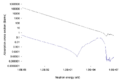 Neutron Cross Section Boron


Medical Disclaimer: WikiMD is for informational purposes only and is not a substitute for professional medical advice. Content may be inaccurate or outdated and should not be used for diagnosis or treatment. Always consult your healthcare provider for medical decisions. Verify information with trusted sources such as CDC.gov and NIH.gov. By using this site, you agree that WikiMD is not liable for any outcomes related to its content. See full disclaimer.
Credits:Most images are courtesy of Wikimedia commons, and templates, categories Wikipedia, licensed under CC BY SA or similar.
Translate page: - East Asian
中文,
日本,
한국어,
South Asian
हिन्दी,
தமிழ்,
తెలుగు,
Urdu,
ಕನ್ನಡ,
Southeast Asian
Indonesian,
Vietnamese,
Thai,
မြန်မာဘာသာ,
বাংলা
European
español,
Deutsch,
français,
Greek,
português do Brasil,
polski,
română,
русский,
Nederlands,
norsk,
svenska,
suomi,
Italian
Middle Eastern & African
عربى,
Turkish,
Persian,
Hebrew,
Afrikaans,
isiZulu,
Kiswahili,
Other
Bulgarian,
Hungarian,
Czech,
Swedish,
മലയാളം,
मराठी,
ਪੰਜਾਬੀ,
ગુજરાતી,
Portuguese,
Ukrainian

