Natillas
Natillas is a traditional Spanish dessert, typically made from milk, sugar, vanilla, and eggs. The dish is similar to other European desserts such as custard and Crème anglaise, but has a distinct flavor and texture that sets it apart.
History[edit]
The origins of Natillas can be traced back to the Middle Ages, when it was commonly prepared in monasteries. The dessert was traditionally served during the Lent season, as it was a simple and economical dish that could be made with readily available ingredients.
Preparation[edit]
To prepare Natillas, milk is first heated with sugar and a vanilla pod to infuse the flavor. In a separate bowl, egg yolks are beaten until they become creamy. The hot milk is then gradually added to the egg yolks, stirring constantly to prevent the eggs from curdling. The mixture is returned to the heat and cooked gently until it thickens. The finished Natillas is usually served chilled, often with a sprinkle of cinnamon on top.
Variations[edit]
There are many regional variations of Natillas throughout Spain. In some areas, the dessert is thickened with cornstarch instead of egg yolks, resulting in a lighter texture. Other variations may include the addition of ingredients such as lemon zest, almond extract, or even chocolate.
In Latin America, Natillas is also a popular dessert, with each country having its own unique version. For example, in Colombia, Natillas is a rich, custard-like dessert made with panela (unrefined whole cane sugar) and often served with bunuelos during Christmas.
Cultural Significance[edit]
Natillas is a beloved dessert in Spain and is often served at family gatherings and festive occasions. It is also a staple on the menu of many Spanish restaurants, both in Spain and abroad.
See Also[edit]


Natillas[edit]
-
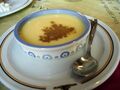 Bowl of natillas at Madrid
 -
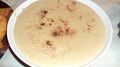 A plate of Colombian Natilla
 -
 Natillas piuranas


Medical Disclaimer: WikiMD is for informational purposes only and is not a substitute for professional medical advice. Content may be inaccurate or outdated and should not be used for diagnosis or treatment. Always consult your healthcare provider for medical decisions. Verify information with trusted sources such as CDC.gov and NIH.gov. By using this site, you agree that WikiMD is not liable for any outcomes related to its content. See full disclaimer.
Credits:Most images are courtesy of Wikimedia commons, and templates, categories Wikipedia, licensed under CC BY SA or similar.
Translate page: - East Asian
中文,
日本,
한국어,
South Asian
हिन्दी,
தமிழ்,
తెలుగు,
Urdu,
ಕನ್ನಡ,
Southeast Asian
Indonesian,
Vietnamese,
Thai,
မြန်မာဘာသာ,
বাংলা
European
español,
Deutsch,
français,
Greek,
português do Brasil,
polski,
română,
русский,
Nederlands,
norsk,
svenska,
suomi,
Italian
Middle Eastern & African
عربى,
Turkish,
Persian,
Hebrew,
Afrikaans,
isiZulu,
Kiswahili,
Other
Bulgarian,
Hungarian,
Czech,
Swedish,
മലയാളം,
मराठी,
ਪੰਜਾਬੀ,
ગુજરાતી,
Portuguese,
Ukrainian

