Nalewka
Nalewka is a traditional Polish alcoholic beverage. The term 'Nalewka' is often translated as 'tincture' in English, but the two are not exactly the same. Nalewka is typically made by macerating various ingredients in alcohol, usually vodka or neutral spirits. Among the ingredients often used are fruits, herbs, spices, and sometimes sugar or honey.
History[edit]
The tradition of making Nalewka dates back to the Middle Ages, when it was primarily used as a medicinal product. The oldest known recipes for Nalewka come from the 16th century. Over time, the beverage has evolved from a medicinal concoction to a popular alcoholic drink, enjoyed for its unique flavors and often homemade nature.
Preparation[edit]
The preparation of Nalewka involves steeping the chosen ingredients in alcohol for a period of time, which can range from a few weeks to several months. The mixture is then strained and often aged for an additional period of time. The final product can range in strength from about 40% to 75% alcohol by volume, depending on the recipe.
Varieties[edit]
There are many varieties of Nalewka, each with its own unique flavor profile. Some of the most popular include:
- Wisniowka: A cherry-flavored Nalewka.
- Krupnik: A Nalewka made with honey and a variety of spices.
- Orzechowka: A walnut-flavored Nalewka.
- Malinowka: A raspberry-flavored Nalewka.
Cultural Significance[edit]
Nalewka holds a significant place in Polish culture. It is often made at home and given as gifts, and it is a common sight at Polish celebrations and gatherings. There are also several commercial brands of Nalewka available, although many Poles still prefer the homemade variety.
See Also[edit]
References[edit]
 | This Poland-related article is a stub. You can help WikiMD by expanding the page. |

Nalewka[edit]
-
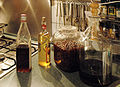 Nalewka wszystkie
 -
 Nastoiki SPB 2022
 -
 Nalewka Kawówka


Medical Disclaimer: WikiMD is for informational purposes only and is not a substitute for professional medical advice. Content may be inaccurate or outdated and should not be used for diagnosis or treatment. Always consult your healthcare provider for medical decisions. Verify information with trusted sources such as CDC.gov and NIH.gov. By using this site, you agree that WikiMD is not liable for any outcomes related to its content. See full disclaimer.
Credits:Most images are courtesy of Wikimedia commons, and templates, categories Wikipedia, licensed under CC BY SA or similar.
Translate page: - East Asian
中文,
日本,
한국어,
South Asian
हिन्दी,
தமிழ்,
తెలుగు,
Urdu,
ಕನ್ನಡ,
Southeast Asian
Indonesian,
Vietnamese,
Thai,
မြန်မာဘာသာ,
বাংলা
European
español,
Deutsch,
français,
Greek,
português do Brasil,
polski,
română,
русский,
Nederlands,
norsk,
svenska,
suomi,
Italian
Middle Eastern & African
عربى,
Turkish,
Persian,
Hebrew,
Afrikaans,
isiZulu,
Kiswahili,
Other
Bulgarian,
Hungarian,
Czech,
Swedish,
മലയാളം,
मराठी,
ਪੰਜਾਬੀ,
ગુજરાતી,
Portuguese,
Ukrainian

