Mineral lick
Mineral lick is a natural deposit of minerals that animals regularly visit to supplement their diet. Also known as a salt lick, these deposits are essential for the health and wellbeing of many species of wildlife.
Overview[edit]
A mineral lick is a place where animals can go to consume essential minerals that are not readily available in their regular diet. These minerals can include salt, calcium, phosphorus, zinc, and iron, among others. Animals such as deer, cattle, and elephants are known to frequent mineral licks.
Formation[edit]
Mineral licks can form naturally, often as a result of weathering processes that expose mineral-rich rocks. Animals then consume the exposed minerals, creating a lick over time. Some mineral licks are also man-made, created by humans for the purpose of attracting or supplementing the diet of wildlife or livestock.
Importance to Wildlife[edit]
Mineral licks play a crucial role in the health and survival of many species of wildlife. They provide essential nutrients that animals may not get from their regular diet, particularly during times of stress or during certain stages of life, such as pregnancy or lactation. In addition, mineral licks can serve as important social gathering places for animals, where they can interact and establish social hierarchies.
Human Use[edit]
Humans have long recognized the value of mineral licks for attracting wildlife. Hunters, for example, may use mineral licks to attract game. In addition, farmers and ranchers often provide mineral licks for their livestock to ensure they get the necessary nutrients for growth and health.
Environmental Impact[edit]
While mineral licks can be beneficial for wildlife, they can also have negative environmental impacts. Overuse of a mineral lick can lead to soil erosion and degradation. In addition, the concentration of animals at mineral licks can increase the spread of diseases.
See Also[edit]

-
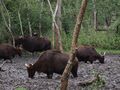 Bos gaurus
 -
 Salt lick
 -
 Pilanesberg Salt lick


Medical Disclaimer: WikiMD is for informational purposes only and is not a substitute for professional medical advice. Content may be inaccurate or outdated and should not be used for diagnosis or treatment. Always consult your healthcare provider for medical decisions. Verify information with trusted sources such as CDC.gov and NIH.gov. By using this site, you agree that WikiMD is not liable for any outcomes related to its content. See full disclaimer.
Credits:Most images are courtesy of Wikimedia commons, and templates, categories Wikipedia, licensed under CC BY SA or similar.
Translate page: - East Asian
中文,
日本,
한국어,
South Asian
हिन्दी,
தமிழ்,
తెలుగు,
Urdu,
ಕನ್ನಡ,
Southeast Asian
Indonesian,
Vietnamese,
Thai,
မြန်မာဘာသာ,
বাংলা
European
español,
Deutsch,
français,
Greek,
português do Brasil,
polski,
română,
русский,
Nederlands,
norsk,
svenska,
suomi,
Italian
Middle Eastern & African
عربى,
Turkish,
Persian,
Hebrew,
Afrikaans,
isiZulu,
Kiswahili,
Other
Bulgarian,
Hungarian,
Czech,
Swedish,
മലയാളം,
मराठी,
ਪੰਜਾਬੀ,
ગુજરાતી,
Portuguese,
Ukrainian

