Minas cheese
Minas cheese is a popular type of cheese originating from the Minas Gerais state in Brazil. It is named after the state where it was first produced and is one of the most consumed cheeses in Brazil.
History[edit]
The production of Minas cheese dates back to the 18th century, during the gold rush period in Minas Gerais. The cheese was made by the wives of the miners, who used the milk from their cows to produce a food that could be easily preserved and consumed.
Production[edit]
Minas cheese is traditionally made from raw milk, although pasteurized milk is also used. The milk is curdled using a natural rennet, and the curds are then drained and pressed into molds. The cheese is then aged for a period of time, which can vary depending on the desired final product. There are three main types of Minas cheese: frescal (fresh), meia-cura (half-aged), and cura (aged).
Frescal[edit]
Frescal is a fresh cheese that is not aged. It has a high moisture content and a mild, slightly acidic flavor. It is often used in salads and sandwiches.
Meia-cura[edit]
Meia-cura is a semi-aged cheese that has a firmer texture and a stronger flavor than frescal. It is often used in cooking, as it melts well.
Cura[edit]
Cura is a fully aged cheese that has a hard, dry texture and a strong, tangy flavor. It is often grated and used as a topping for dishes.
Cultural significance[edit]
Minas cheese is an important part of the culinary and cultural heritage of Minas Gerais. It is often served with coffee or guava paste, a combination known as romeu e julieta in Brazil. The cheese is also a key ingredient in many traditional Brazilian dishes, such as pão de queijo (cheese bread) and doce de leite com queijo (sweet milk with cheese).
See also[edit]
 | This Brazilian cuisine–related article is a stub. You can help WikiMD by expanding the page. |

-
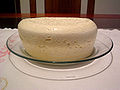 Queijo Minas Frescal
 -
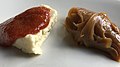 Romeo e Julieta e doce de leite


Medical Disclaimer: WikiMD is for informational purposes only and is not a substitute for professional medical advice. Content may be inaccurate or outdated and should not be used for diagnosis or treatment. Always consult your healthcare provider for medical decisions. Verify information with trusted sources such as CDC.gov and NIH.gov. By using this site, you agree that WikiMD is not liable for any outcomes related to its content. See full disclaimer.
Credits:Most images are courtesy of Wikimedia commons, and templates, categories Wikipedia, licensed under CC BY SA or similar.
Translate page: - East Asian
中文,
日本,
한국어,
South Asian
हिन्दी,
தமிழ்,
తెలుగు,
Urdu,
ಕನ್ನಡ,
Southeast Asian
Indonesian,
Vietnamese,
Thai,
မြန်မာဘာသာ,
বাংলা
European
español,
Deutsch,
français,
Greek,
português do Brasil,
polski,
română,
русский,
Nederlands,
norsk,
svenska,
suomi,
Italian
Middle Eastern & African
عربى,
Turkish,
Persian,
Hebrew,
Afrikaans,
isiZulu,
Kiswahili,
Other
Bulgarian,
Hungarian,
Czech,
Swedish,
മലയാളം,
मराठी,
ਪੰਜਾਬੀ,
ગુજરાતી,
Portuguese,
Ukrainian

