Millerandage
Millerandage is a viticultural problem in which grape bunches contain berries that are greatly different in size and, most importantly, maturity. Its name comes from "millerand," a French term for a small berry. This condition is most often caused by cold, rainy or otherwise bad weather during the flowering stage of the vines.
Causes and Effects[edit]
Millerandage primarily occurs when the grapevine's flowers are not fertilized properly. This can be due to a variety of factors, including poor weather conditions, such as cold, wind, or rain, during the flowering stage. Other potential causes include nutrient deficiencies, pests, and diseases.
The main effect of millerandage is a reduction in yield, as the smaller, less mature berries produce less juice. This can have significant economic implications for vineyards. However, it's worth noting that millerandage can also affect the quality of the wine, as the unevenly matured grapes can lead to uneven ripening and potentially lower quality wine.
Management[edit]
There are several strategies for managing millerandage. One common approach is to use viticultural practices that promote even flowering and fruit set. This can include careful pruning, maintaining balanced vine nutrition, and managing pests and diseases.
In some cases, winemakers may choose to embrace the effects of millerandage. The smaller, less mature berries can contribute higher acidity and potentially more complex flavors to the wine, which can be desirable in certain styles of wine.
See Also[edit]
This viticulture related article is a stub. You can help WikiMD by expanding it.

Millerandage[edit]
-
 Cluster with immature grapes
 -
 Grape inflorescence
 -
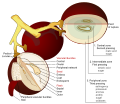 Wine grape diagram


Medical Disclaimer: WikiMD is for informational purposes only and is not a substitute for professional medical advice. Content may be inaccurate or outdated and should not be used for diagnosis or treatment. Always consult your healthcare provider for medical decisions. Verify information with trusted sources such as CDC.gov and NIH.gov. By using this site, you agree that WikiMD is not liable for any outcomes related to its content. See full disclaimer.
Credits:Most images are courtesy of Wikimedia commons, and templates, categories Wikipedia, licensed under CC BY SA or similar.
Translate page: - East Asian
中文,
日本,
한국어,
South Asian
हिन्दी,
தமிழ்,
తెలుగు,
Urdu,
ಕನ್ನಡ,
Southeast Asian
Indonesian,
Vietnamese,
Thai,
မြန်မာဘာသာ,
বাংলা
European
español,
Deutsch,
français,
Greek,
português do Brasil,
polski,
română,
русский,
Nederlands,
norsk,
svenska,
suomi,
Italian
Middle Eastern & African
عربى,
Turkish,
Persian,
Hebrew,
Afrikaans,
isiZulu,
Kiswahili,
Other
Bulgarian,
Hungarian,
Czech,
Swedish,
മലയാളം,
मराठी,
ਪੰਜਾਬੀ,
ગુજરાતી,
Portuguese,
Ukrainian

