Microcalcification
Microcalcification is a medical term referring to tiny deposits of calcium in tissues, such as the breast or kidney. These deposits are so small they cannot be felt, but they can be detected on mammography or other imaging techniques. Microcalcifications are often benign, but they can sometimes indicate the presence of a cancerous tumor.
Causes[edit]
Microcalcifications can be caused by a variety of conditions, including aging, inflammation, previous injury, or an underlying disease such as cancer. In the breast, they are often associated with ductal carcinoma in situ (DCIS), a non-invasive form of breast cancer.
Detection[edit]
Microcalcifications are usually detected during routine mammography. They appear as small white spots on the mammogram. If microcalcifications are found, the radiologist will look at their pattern, size, shape, and number to determine if they are likely to be benign or malignant.
Treatment[edit]
The treatment for microcalcifications depends on their cause. If they are caused by cancer, treatment may include surgery, radiation therapy, or chemotherapy. If they are benign, no treatment may be necessary, but regular monitoring may be recommended to ensure they do not change over time.
See also[edit]

This WikiMD article can only be edited by registered and verified editors. You can log in or register.
-
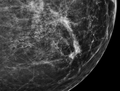 Microcalcification
 -
 Microcalcification
 -
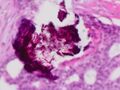 Microcalcification
 -
 Microcalcification


Medical Disclaimer: WikiMD is for informational purposes only and is not a substitute for professional medical advice. Content may be inaccurate or outdated and should not be used for diagnosis or treatment. Always consult your healthcare provider for medical decisions. Verify information with trusted sources such as CDC.gov and NIH.gov. By using this site, you agree that WikiMD is not liable for any outcomes related to its content. See full disclaimer.
Credits:Most images are courtesy of Wikimedia commons, and templates, categories Wikipedia, licensed under CC BY SA or similar.
Translate page: - East Asian
中文,
日本,
한국어,
South Asian
हिन्दी,
தமிழ்,
తెలుగు,
Urdu,
ಕನ್ನಡ,
Southeast Asian
Indonesian,
Vietnamese,
Thai,
မြန်မာဘာသာ,
বাংলা
European
español,
Deutsch,
français,
Greek,
português do Brasil,
polski,
română,
русский,
Nederlands,
norsk,
svenska,
suomi,
Italian
Middle Eastern & African
عربى,
Turkish,
Persian,
Hebrew,
Afrikaans,
isiZulu,
Kiswahili,
Other
Bulgarian,
Hungarian,
Czech,
Swedish,
മലയാളം,
मराठी,
ਪੰਜਾਬੀ,
ગુજરાતી,
Portuguese,
Ukrainian

