Meatball soup
Meatball Soup is a traditional dish found in various cuisines around the world. It consists of meatballs cooked in a soup base, often with added vegetables, herbs, and spices. The meatballs can be made from a variety of meats, including beef, pork, chicken, or turkey. The soup base can be a simple broth, a tomato-based sauce, or a creamy bechamel sauce.
History[edit]
The origins of meatball soup are difficult to trace, as it is a dish that has been adopted and adapted by many different cultures. However, it is believed to have originated in the Middle East, where meatballs, or kofte, are a staple of the cuisine. From there, it spread to Europe, Asia, and the Americas, each region adding its own unique twist to the dish.
Variations[edit]
There are many variations of meatball soup, depending on the region and the ingredients available. For example, in Italy, meatball soup is often made with a tomato-based broth and includes pasta, while in Sweden, meatball soup is typically served with a creamy sauce and potatoes. In Mexico, meatball soup, or albondigas, is made with a spicy tomato broth and includes rice and vegetables.
Preparation[edit]
The preparation of meatball soup involves several steps. First, the meatballs are made by combining ground meat with breadcrumbs, eggs, and seasonings. These are then formed into small balls and cooked. Meanwhile, the soup base is prepared by sautéing vegetables and herbs, then adding broth or sauce. The cooked meatballs are added to the soup and simmered until all the flavors are well combined.
Nutritional Value[edit]
Meatball soup can be a nutritious meal, providing protein from the meatballs, vitamins and minerals from the vegetables, and carbohydrates from any added pasta or rice. However, the nutritional value can vary greatly depending on the specific recipe and ingredients used.
See Also[edit]

Meatball_soup[edit]
-
Soup with meatballs
-
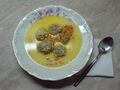 Meat ball soup
 -
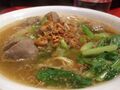 Bakso
Bakso -
 Almondigas
 -
Meatball soup


Medical Disclaimer: WikiMD is for informational purposes only and is not a substitute for professional medical advice. Content may be inaccurate or outdated and should not be used for diagnosis or treatment. Always consult your healthcare provider for medical decisions. Verify information with trusted sources such as CDC.gov and NIH.gov. By using this site, you agree that WikiMD is not liable for any outcomes related to its content. See full disclaimer.
Credits:Most images are courtesy of Wikimedia commons, and templates, categories Wikipedia, licensed under CC BY SA or similar.
Translate page: - East Asian
中文,
日本,
한국어,
South Asian
हिन्दी,
தமிழ்,
తెలుగు,
Urdu,
ಕನ್ನಡ,
Southeast Asian
Indonesian,
Vietnamese,
Thai,
မြန်မာဘာသာ,
বাংলা
European
español,
Deutsch,
français,
Greek,
português do Brasil,
polski,
română,
русский,
Nederlands,
norsk,
svenska,
suomi,
Italian
Middle Eastern & African
عربى,
Turkish,
Persian,
Hebrew,
Afrikaans,
isiZulu,
Kiswahili,
Other
Bulgarian,
Hungarian,
Czech,
Swedish,
മലയാളം,
मराठी,
ਪੰਜਾਬੀ,
ગુજરાતી,
Portuguese,
Ukrainian


