Madhuca longifolia
Madhuca longifolia is a tropical tree species in the family Sapotaceae. It is native to parts of India, Nepal, Bangladesh, and Myanmar. The tree is known for its economic and medicinal value in its native regions.
Description[edit]
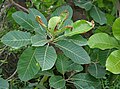
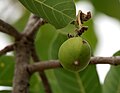
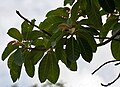
Madhuca longifolia is a large, deciduous tree that can reach up to 20 meters in height. It has a thick, dark brown bark and simple, alternate leaves. The tree produces clusters of small, yellow flowers that have a sweet fragrance. The fruit of the tree is a berry that contains one to four seeds.
Uses[edit]
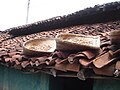
The tree has several uses in traditional medicine and as a source of food. The flowers of the Madhuca longifolia tree are edible and are often used to make a type of sweet liquor known as Mahua. The seeds of the tree are a source of oil, known as Mahua oil, which is used for cooking and in the production of soap. The bark and leaves of the tree are used in traditional medicine to treat a variety of ailments.
Cultivation[edit]
Madhuca longifolia is a hardy tree that can tolerate a range of soil types and climates. It prefers a well-drained soil and a sunny location. The tree is propagated from seeds, which are sown in the rainy season.
Conservation[edit]
While the Madhuca longifolia tree is not currently listed as endangered, it is under threat from habitat loss and over-exploitation. Efforts are being made to conserve the species through sustainable harvesting practices and reforestation programs.
References[edit]
This tree-related article is a stub. You can help WikiMD by expanding it.
This medicinal plants related article is a stub. You can help WikiMD by expanding it.

-
 Madhuca longifolia
 -
 Madhuca longifolia
 -
 Madhuca longifolia
 -
 Madhuca longifolia
 -
 Madhuca longifolia
 -
 Madhuca longifolia
 -
 Madhuca longifolia
 -
 Madhuca longifolia
 -
 Madhuca longifolia
 -
 Madhuca longifolia
 -
 Madhuca longifolia
 -
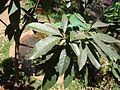 Madhuca longifolia

_in_Hyderabad,_AP_W_IMG_0068.jpg)


_fruit_W_IMG_0245.jpg)
_leaves_W_IMG_0247.jpg)
_trunk_W_IMG_0246.jpg)
_W_IMG_0242.jpg)


Medical Disclaimer: WikiMD is for informational purposes only and is not a substitute for professional medical advice. Content may be inaccurate or outdated and should not be used for diagnosis or treatment. Always consult your healthcare provider for medical decisions. Verify information with trusted sources such as CDC.gov and NIH.gov. By using this site, you agree that WikiMD is not liable for any outcomes related to its content. See full disclaimer.
Credits:Most images are courtesy of Wikimedia commons, and templates, categories Wikipedia, licensed under CC BY SA or similar.
Translate page: - East Asian
中文,
日本,
한국어,
South Asian
हिन्दी,
தமிழ்,
తెలుగు,
Urdu,
ಕನ್ನಡ,
Southeast Asian
Indonesian,
Vietnamese,
Thai,
မြန်မာဘာသာ,
বাংলা
European
español,
Deutsch,
français,
Greek,
português do Brasil,
polski,
română,
русский,
Nederlands,
norsk,
svenska,
suomi,
Italian
Middle Eastern & African
عربى,
Turkish,
Persian,
Hebrew,
Afrikaans,
isiZulu,
Kiswahili,
Other
Bulgarian,
Hungarian,
Czech,
Swedish,
മലയാളം,
मराठी,
ਪੰਜਾਬੀ,
ગુજરાતી,
Portuguese,
Ukrainian

