MT-45
MT-45 is a synthetic opioid that was first developed in the 1970s by the pharmaceutical company Dainippon Pharmaceutical. It is a piperazine derivative and has been used as a designer drug. MT-45 has been associated with several cases of serious toxicity and death.
History[edit]
MT-45 was first synthesized in the 1970s by Dainippon Pharmaceutical as part of a series of analgesic drugs. However, it was never marketed for medical use. In the 2010s, it began to appear on the recreational drug market as a designer drug.
Pharmacology[edit]
MT-45 is a synthetic opioid and acts as a mu-opioid receptor agonist. It has been found to have analgesic effects in animal studies. However, its potency is much lower than that of other commonly used opioids such as morphine or fentanyl.
Toxicity and Adverse Effects[edit]
Several cases of serious toxicity associated with MT-45 use have been reported. These include skin and eye damage, hearing loss, and respiratory depression. In some cases, use of MT-45 has resulted in death.
Legal Status[edit]
Due to its potential for abuse and serious health risks, MT-45 has been made illegal in many countries. It is classified as a Schedule I drug in the United States and a Class A drug in the United Kingdom.
See Also[edit]

-
 MT-45 structure in SVG format
 -
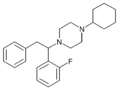 2F-MT-45 structure


Advertise on WikiMD — 81,000+ full articles, ~900,000 total pages, ~250 million page views. Global reach, limited time promotional rates from $1/page/day. Learn more · View stats


Translate page: - East Asian
中文,
日本,
한국어,
South Asian
हिन्दी,
தமிழ்,
తెలుగు,
Urdu,
ಕನ್ನಡ,
Southeast Asian
Indonesian,
Vietnamese,
Thai,
မြန်မာဘာသာ,
বাংলা
European
español,
Deutsch,
français,
Greek,
português do Brasil,
polski,
română,
русский,
Nederlands,
norsk,
svenska,
suomi,
Italian
Middle Eastern & African
عربى,
Turkish,
Persian,
Hebrew,
Afrikaans,
isiZulu,
Kiswahili,
Other
Bulgarian,
Hungarian,
Czech,
Swedish,
മലയാളം,
मराठी,
ਪੰਜਾਬੀ,
ગુજરાતી,
Portuguese,
Ukrainian
About WikiMD • Contact • Disclaimer • Privacy • Copyright • Site statistics
Some content and images may originate from Wikimedia Commons or Wikipedia and remain subject to their stated licenses. Unless otherwise noted, eligible WikiMD content is available under CC BY-SA 4.0.
WikiMD Wellnesspedia — Free health & wellness information for patients, students, and health professionals.

