Luminance
Luminance is a photometric measure of the luminous intensity per unit area of light travelling in a given direction. It describes the amount of light that passes through, is emitted or reflected from a particular area, and falls within a given solid angle. The SI unit for luminance is candela per square metre (cd/m²).
Definition[edit]
Luminance is often used to characterize emission or reflection from flat, diffuse surfaces. The luminance indicates how much luminous power will be detected by an eye looking at the surface from a particular angle of view. Luminance is thus an indicator of how bright the surface will appear. In this case, the solid angle of interest is the solid angle subtended by the eye's pupil. Luminance is used in the video industry to characterize the brightness of displays. A typical computer display emits between 50 and 300 cd/m². The sun has luminance of about 1.6 billion cd/m² at noon.
Measurement[edit]
Luminance is measured with a photometer or a spectroradiometer. A photometer is designed to measure luminance in a way that is closely related to the way the human eye perceives light, while a spectroradiometer measures absolute spectral power distributions and can calculate colorimetric quantities such as luminance.
Applications[edit]
Luminance is used in many industries, including entertainment, automotive, and lighting. In the entertainment industry, luminance is used to measure the brightness of displays, such as televisions and computer monitors. In the automotive industry, luminance is used to measure the brightness of lights, such as headlights and taillights. In the lighting industry, luminance is used to measure the brightness of light sources, such as lamps and light fixtures.
See also[edit]
References[edit]
 | This medical article is a stub. You can help WikiMD by expanding the page. |
-
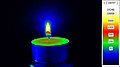 Luminance
 -
 Etendue
 -
 Photometry and Radiometry Units


Medical Disclaimer: WikiMD is for informational purposes only and is not a substitute for professional medical advice. Content may be inaccurate or outdated and should not be used for diagnosis or treatment. Always consult your healthcare provider for medical decisions. Verify information with trusted sources such as CDC.gov and NIH.gov. By using this site, you agree that WikiMD is not liable for any outcomes related to its content. See full disclaimer.
Credits:Most images are courtesy of Wikimedia commons, and templates, categories Wikipedia, licensed under CC BY SA or similar.
Translate this page: - East Asian
中文,
日本,
한국어,
South Asian
हिन्दी,
தமிழ்,
తెలుగు,
Urdu,
ಕನ್ನಡ,
Southeast Asian
Indonesian,
Vietnamese,
Thai,
မြန်မာဘာသာ,
বাংলা
European
español,
Deutsch,
français,
Greek,
português do Brasil,
polski,
română,
русский,
Nederlands,
norsk,
svenska,
suomi,
Italian
Middle Eastern & African
عربى,
Turkish,
Persian,
Hebrew,
Afrikaans,
isiZulu,
Kiswahili,
Other
Bulgarian,
Hungarian,
Czech,
Swedish,
മലയാളം,
मराठी,
ਪੰਜਾਬੀ,
ગુજરાતી,
Portuguese,
Ukrainian
