Large-cell lung carcinoma

Editor-In-Chief: Prab R Tumpati, MD
Obesity, Sleep & Internal medicine
Founder, WikiMD Wellnesspedia &
W8MD's weight loss doctor NYC
Philadelphia GLP-1 weight loss and GLP-1 clinic NYC
| Large-cell lung carcinoma | |
|---|---|
| File:Large cell carcinoma of the lung.jpg | |
| Synonyms | Large-cell carcinoma |
| Pronounce | N/A |
| Specialty | N/A |
| Symptoms | Cough, hemoptysis, dyspnea, chest pain |
| Complications | Metastasis, pleural effusion |
| Onset | Typically in adulthood |
| Duration | Variable |
| Types | Lung cancer |
| Causes | Smoking, genetic factors, environmental exposure |
| Risks | Tobacco smoking, family history of lung cancer, exposure to radon |
| Diagnosis | Chest X-ray, CT scan, biopsy |
| Differential diagnosis | Adenocarcinoma, squamous cell carcinoma, small-cell lung carcinoma |
| Prevention | Smoking cessation, avoiding carcinogens |
| Treatment | Surgery, chemotherapy, radiation therapy |
| Medication | Platinum-based chemotherapy, immunotherapy |
| Prognosis | Generally poor, varies with stage |
| Frequency | Less common than other types of non-small cell lung carcinoma |
| Deaths | N/A |
Large-cell lung carcinoma (LCLC) is a type of non-small cell lung cancer (NSCLC) characterized by large, abnormal cells seen under a microscope. It accounts for approximately 10-15% of all lung cancers, making it less common than other types of NSCLC such as adenocarcinoma and squamous cell carcinoma. Due to its aggressive nature, early detection and treatment are crucial for improving patient outcomes.
Etiology and Risk Factors[edit]
The exact cause of large-cell lung carcinoma is not fully understood, but it shares similar risk factors with other forms of lung cancer. These include:
- Smoking: The primary risk factor for LCLC, as well as other types of lung cancer.
- Exposure to radon gas: A naturally occurring radioactive gas that can accumulate in buildings.
- Occupational exposure to carcinogens: Such as asbestos, arsenic, and certain chemicals used in manufacturing.
- Family history of lung cancer: Individuals with a family history of lung cancer may have a higher risk.
Symptoms[edit]
Symptoms of large-cell lung carcinoma may not appear until the disease is advanced and can include:
- Persistent cough
- Coughing up blood
- Shortness of breath
- Chest pain
- Unexplained weight loss
- Fatigue
Diagnosis[edit]
Diagnosis of LCLC typically involves a combination of imaging tests, such as X-rays and CT scans, and biopsy procedures to examine tissue samples under a microscope. Bronchoscopy and mediastinoscopy are common procedures used to obtain tissue samples.
Treatment[edit]
Treatment options for large-cell lung carcinoma depend on the stage of the disease at diagnosis and may include:
- Surgery: To remove the tumor if it is localized.
- Chemotherapy: Often used in combination with surgery or as the primary treatment for advanced stages.
- Radiation therapy: May be used in conjunction with other treatments or for symptom management in advanced cases.
- Targeted therapy and immunotherapy: Newer treatment options that may be effective for certain patients based on specific genetic markers or immune characteristics.
Prognosis[edit]
The prognosis for large-cell lung carcinoma varies depending on the stage at diagnosis and the patient's overall health. Early-stage disease has a better prognosis, while advanced disease is associated with a lower survival rate. Ongoing research and advances in treatment are improving outcomes for some patients.
Prevention[edit]
Prevention strategies for large-cell lung carcinoma largely mirror those for other types of lung cancer and include:
- Avoiding tobacco use
- Reducing exposure to known carcinogens
- Ensuring safe levels of radon in homes and workplaces
Gallery[edit]
-
Large-cell lung carcinoma
-
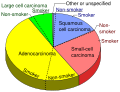 Pie chart of lung cancers

 | This oncology article is a stub. You can help WikiMD by expanding the page. |

Medical Disclaimer: WikiMD is for informational purposes only and is not a substitute for professional medical advice. Content may be inaccurate or outdated and should not be used for diagnosis or treatment. Always consult your healthcare provider for medical decisions. Verify information with trusted sources such as CDC.gov and NIH.gov. By using this site, you agree that WikiMD is not liable for any outcomes related to its content. See full disclaimer.
Credits:Most images are courtesy of Wikimedia commons, and templates, categories Wikipedia, licensed under CC BY SA or similar.
Translate page: - East Asian
中文,
日本,
한국어,
South Asian
हिन्दी,
தமிழ்,
తెలుగు,
Urdu,
ಕನ್ನಡ,
Southeast Asian
Indonesian,
Vietnamese,
Thai,
မြန်မာဘာသာ,
বাংলা
European
español,
Deutsch,
français,
Greek,
português do Brasil,
polski,
română,
русский,
Nederlands,
norsk,
svenska,
suomi,
Italian
Middle Eastern & African
عربى,
Turkish,
Persian,
Hebrew,
Afrikaans,
isiZulu,
Kiswahili,
Other
Bulgarian,
Hungarian,
Czech,
Swedish,
മലയാളം,
मराठी,
ਪੰਜਾਬੀ,
ગુજરાતી,
Portuguese,
Ukrainian


