Kyrgyz cuisine
Kyrgyz cuisine is the traditional cuisine of the Kyrgyz people, who primarily inhabit the country of Kyrgyzstan. It is heavily influenced by the nomadic lifestyle of the Kyrgyz people, as well as the culinary traditions of their Turkic and Mongol neighbors.
History[edit]
The history of Kyrgyz cuisine dates back to the nomadic origins of the Kyrgyz people. The harsh climate and nomadic lifestyle necessitated a diet that was high in protein and fat, which could provide the necessary energy for survival. This led to a reliance on animal products, particularly meat and dairy.
Ingredients[edit]
The primary ingredients in Kyrgyz cuisine are meat, dairy products, and grains. Mutton and beef are the most commonly used meats, while horse meat is also consumed, particularly in traditional dishes. Dairy products such as kumis (fermented mare's milk) and sour cream are also staples of the Kyrgyz diet. Grains such as wheat, barley, and millet are used to make breads and other staple foods.
Dishes[edit]
Some of the most popular dishes in Kyrgyz cuisine include beshbarmak, a boiled meat dish typically served with noodles and a meat broth, and plov, a rice dish cooked with meat and vegetables. Other traditional dishes include manty (steamed dumplings filled with meat or vegetables), shashlik (skewered and grilled cubes of meat), and kuurdak (a stew made from liver, lungs, and heart).
Beverages[edit]
Traditional Kyrgyz beverages include kumis, a fermented mare's milk, and chai (tea). Vodka is also commonly consumed, reflecting the influence of Russian culture on Kyrgyzstan.
Cultural Significance[edit]
Food plays a significant role in Kyrgyz culture. Traditional dishes are often served at celebrations and ceremonies, and the preparation of food is considered an important social activity. The hospitality of the Kyrgyz people is also reflected in their food culture, with guests often being offered the best and most substantial dishes.

-
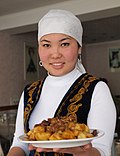 A Kyrgyz woman
 -
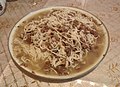 Beshbarmak, a traditional Kyrgyz dish
 -
 Paloo cooking in a Kazan
 -
 Dordoy Bazaar
 -
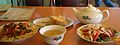 Laghman at Dordoy Bazaar
 -
 Tandoor bread at the market
 -
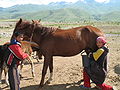 Mare milking in Suusamyr


Medical Disclaimer: WikiMD is for informational purposes only and is not a substitute for professional medical advice. Content may be inaccurate or outdated and should not be used for diagnosis or treatment. Always consult your healthcare provider for medical decisions. Verify information with trusted sources such as CDC.gov and NIH.gov. By using this site, you agree that WikiMD is not liable for any outcomes related to its content. See full disclaimer.
Credits:Most images are courtesy of Wikimedia commons, and templates, categories Wikipedia, licensed under CC BY SA or similar.
Translate page: - East Asian
中文,
日本,
한국어,
South Asian
हिन्दी,
தமிழ்,
తెలుగు,
Urdu,
ಕನ್ನಡ,
Southeast Asian
Indonesian,
Vietnamese,
Thai,
မြန်မာဘာသာ,
বাংলা
European
español,
Deutsch,
français,
Greek,
português do Brasil,
polski,
română,
русский,
Nederlands,
norsk,
svenska,
suomi,
Italian
Middle Eastern & African
عربى,
Turkish,
Persian,
Hebrew,
Afrikaans,
isiZulu,
Kiswahili,
Other
Bulgarian,
Hungarian,
Czech,
Swedish,
മലയാളം,
मराठी,
ਪੰਜਾਬੀ,
ગુજરાતી,
Portuguese,
Ukrainian

