Iridescent shark
The Iridescent Shark (Pangasianodon hypophthalmus) is a species of shark that is native to the rivers of Southeast Asia. Despite its name, it is not a true shark, but rather a species of catfish. It is also known as the Sutchi Catfish or Striped Catfish and is one of the most popular aquarium fish due to its unique iridescent color.
Description[edit]
The Iridescent Shark is characterized by its elongated, torpedo-shaped body and the distinctive iridescent color that gives it its name. The color can range from a dark gray to a light silver, and the fish has a distinctive glow when viewed under certain light conditions. The Iridescent Shark can grow up to 4 feet in length and weigh up to 44 kg.
Habitat and Distribution[edit]
The Iridescent Shark is native to the Mekong and Chao Phraya rivers in Southeast Asia. It prefers large, fast-flowing rivers and is often found in deep water. The species has also been introduced to other parts of the world, including North America and Europe, for the purpose of aquaculture.
Diet[edit]
The Iridescent Shark is an omnivore, feeding on a diet of algae, plankton, and small invertebrates. In captivity, they are often fed a diet of commercially prepared fish food.
In the Aquarium[edit]
The Iridescent Shark is a popular choice for home aquariums due to its unique color and active behavior. However, due to its large size and active nature, it requires a large tank and plenty of room to swim. It is also a social species and prefers to be kept in groups.
Conservation Status[edit]
The Iridescent Shark is currently listed as Data Deficient by the International Union for Conservation of Nature (IUCN). This is due to a lack of data on its population size and trends. However, it is known that the species is heavily exploited for the aquarium trade and for food in its native range.
See Also[edit]
 | This fish-related article is a stub. You can help WikiMD by expanding the page. |

Iridescent_shark[edit]
-
Iridescent shark
-
Striped catfish aquaculture production, million tonnes, 1950-2022
-
Pangasius hypophthalmus migrations
-
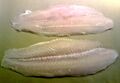 Swai fillet
 -
Pangasius in aquarium

Advertise on WikiMD — 81,000+ full articles, ~900,000 total pages, ~250 million page views. Global reach, limited time promotional rates from $1/page/day. Learn more · View stats

Translate page: - East Asian
中文,
日本,
한국어,
South Asian
हिन्दी,
தமிழ்,
తెలుగు,
Urdu,
ಕನ್ನಡ,
Southeast Asian
Indonesian,
Vietnamese,
Thai,
မြန်မာဘာသာ,
বাংলা
European
español,
Deutsch,
français,
Greek,
português do Brasil,
polski,
română,
русский,
Nederlands,
norsk,
svenska,
suomi,
Italian
Middle Eastern & African
عربى,
Turkish,
Persian,
Hebrew,
Afrikaans,
isiZulu,
Kiswahili,
Other
Bulgarian,
Hungarian,
Czech,
Swedish,
മലയാളം,
मराठी,
ਪੰਜਾਬੀ,
ગુજરાતી,
Portuguese,
Ukrainian
About WikiMD • Contact • Disclaimer • Privacy • Copyright • Site statistics
Some content and images may originate from Wikimedia Commons or Wikipedia and remain subject to their stated licenses. Unless otherwise noted, eligible WikiMD content is available under CC BY-SA 4.0.
WikiMD Wellnesspedia — Free health & wellness information for patients, students, and health professionals.


