Inulinase
Inulinase is an enzyme that catalyzes the hydrolysis of inulin, a polysaccharide found in many plants, into simpler sugars. Inulinases are of significant interest in various industries, particularly in food and biofuel production, due to their ability to convert inulin into fructose and fructooligosaccharides (FOS), which are valuable in the food industry for their prebiotic properties and in the production of bioethanol.
Types of Inulinase[edit]
Inulinases can be broadly classified into two types based on their mode of action:
- Endoinulinase (EC 3.2.1.7): This type of inulinase cleaves the internal glycosidic bonds of inulin, resulting in the production of inulooligosaccharides of varying lengths.
- Exoinulinase (EC 3.2.1.80): Exoinulinase acts on the terminal ends of the inulin molecule, releasing fructose one unit at a time.
Sources[edit]
Inulinases are produced by various microorganisms, including bacteria, yeasts, and fungi. Some notable microorganisms that produce inulinase include Aspergillus niger, Aspergillus awamori, and Kluyveromyces marxianus. The production of inulinase can be enhanced through genetic engineering and fermentation optimization techniques.
Applications[edit]
The applications of inulinase are diverse and span several industries:
- Food Industry: Inulinase is used to produce high-fructose syrups from inulin-containing plants. It is also involved in the production of fructooligosaccharides, which are used as prebiotic food ingredients.
- Biofuel Production: Inulinase plays a role in the bioconversion of inulin into fermentable sugars, which can then be converted into bioethanol, a renewable energy source.
- Pharmaceutical Industry: Due to the prebiotic properties of fructooligosaccharides produced by inulinase action, this enzyme finds applications in the development of health supplements and functional foods.
Health Benefits[edit]
The consumption of fructooligosaccharides produced by inulinase activity has been associated with several health benefits, including improved gut health, enhanced mineral absorption, and potential reduction in the risk of colon cancer.
Challenges and Future Directions[edit]
While inulinase holds great promise in various applications, challenges such as enzyme stability, cost of production, and efficiency of the enzyme in industrial processes need to be addressed. Advances in biotechnology and enzyme engineering are expected to overcome these challenges, leading to wider adoption of inulinase in industrial applications.
See Also[edit]
.svg) | This biochemistry article is a stub. You can help WikiMD by expanding the page. |
-
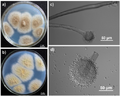 Aspergillus tubingensis FJBJ11
 -
Jerusalem Artichokes tubers
-
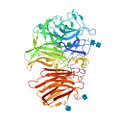 Inulinase structure 1y9g
 -
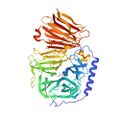 Inulinase structure 6nun


Sponsored Health Resource

W8MD Weight Loss, Sleep & MedSpa
Looking for physician-supervised weight loss, semaglutide, tirzepatide, or GLP-1 receptor agonist options? W8MD helps eligible patients in New York City, Brooklyn, New Jersey, Connecticut, Pennsylvania, Delaware, and greater Philadelphia with medical weight loss, sleep medicine, and long-term maintenance support.
GLP-1 specials: Affordable GLP-1 injections NYC and Philadelphia starting from $29.99/week and up for semaglutide with insurance accepted for qualifying visits, and $45/week and up for tirzepatide with insurance accepted for qualifying visits. Self-pay options start from $59.99/week and up for semaglutide and $69.99/week and up for tirzepatide.
Medical weight loss NYC | Affordable GLP-1 injections NYC | Budget GLP-1 weight loss shots Philadelphia | New Jersey medical weight loss | NYC medical weight loss | Philadelphia medical weight loss | Sleep clinic NYC | W8MD's Philadelphia GLP-1 doctor | Weight loss prescriptions NYC
Book a W8MD appointment · View GLP-1 specials
Paid promotional message. Eligibility, pricing, insurance coverage, medication availability, and results vary. Medical evaluation required.

Medical Disclaimer: WikiMD is for informational purposes only and is not a substitute for professional medical advice. Content may be inaccurate or outdated and should not be used for diagnosis or treatment. Always consult your healthcare provider for medical decisions. Verify information with trusted sources such as CDC.gov and NIH.gov. By using this site, you agree that WikiMD is not liable for any outcomes related to its content. See full disclaimer.
Credits:Most images are courtesy of Wikimedia commons, and templates, categories Wikipedia, licensed under CC BY SA or similar.
Translate page: - East Asian
中文,
日本,
한국어,
South Asian
हिन्दी,
தமிழ்,
తెలుగు,
Urdu,
ಕನ್ನಡ,
Southeast Asian
Indonesian,
Vietnamese,
Thai,
မြန်မာဘာသာ,
বাংলা
European
español,
Deutsch,
français,
Greek,
português do Brasil,
polski,
română,
русский,
Nederlands,
norsk,
svenska,
suomi,
Italian
Middle Eastern & African
عربى,
Turkish,
Persian,
Hebrew,
Afrikaans,
isiZulu,
Kiswahili,
Other
Bulgarian,
Hungarian,
Czech,
Swedish,
മലയാളം,
मराठी,
ਪੰਜਾਬੀ,
ગુજરાતી,
Portuguese,
Ukrainian


