Extracellular fluid
Extracellular fluid (ECF) denotes all body fluid outside the cells of any multicellular organism. In humans, this includes the blood plasma, interstitial fluid, lymph and cerebrospinal fluid. The extracellular fluid also includes the transcellular fluid, which comprises of fluid contained in special body spaces, such as the synovial fluid in joints, the pleural fluid in the pleural cavities, the pericardial fluid in the cardiac sac, the intraocular fluid in the eyes, and the cerebrospinal fluid in the brain and spine.
Composition[edit]
The extracellular fluid is essentially an aqueous solution containing a variety of substances, including electrolytes, glucose, oxygen, and carbon dioxide. The electrolytes in the ECF are primarily sodium, chloride, and bicarbonate, with smaller amounts of potassium, calcium, and magnesium. The ECF also contains larger molecules such as proteins and other organic and inorganic compounds.
Function[edit]
The primary function of the extracellular fluid is to provide a consistent environment for the body's cells. It allows for the exchange of nutrients and waste products between the cells and the blood, and helps to maintain the acid-base balance in the body. The ECF also plays a crucial role in the body's immune response, as it contains the white blood cells that fight off infections.
Regulation[edit]
The volume and composition of the extracellular fluid are tightly regulated by a variety of mechanisms, including the kidneys, which filter the blood and excrete excess water and electrolytes in the urine. The lungs also play a role in regulating the ECF, as they remove carbon dioxide (a waste product of cellular metabolism) from the body and help to maintain the acid-base balance.
Disorders[edit]
Disorders of the extracellular fluid can occur when there is an imbalance in the volume or composition of the ECF. This can result from a variety of conditions, including kidney disease, heart failure, and liver disease. Symptoms of ECF disorders can include edema (swelling), dehydration, and changes in blood pressure.

This WikiMD article can only be edited by registered and verified editors. You can log in or register.
-
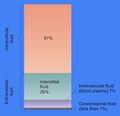 Extracellular fluid
 -
 Cell membrane detailed diagram
 -
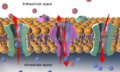 Sodium-potassium pump and diffusion
 -
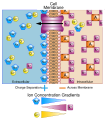 Basis of membrane potential
 -
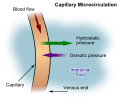 Capillary microcirculation
 -
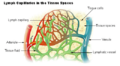 Lymph capillary


Advertise on WikiMD — 81,000+ full articles, ~900,000 total pages, ~250 million page views. Global reach, limited time promotional rates from $1/page/day. Learn more · View stats

Medical Disclaimer: WikiMD is for informational purposes only and is not a substitute for professional medical advice. Content may be inaccurate or outdated and should not be used for diagnosis or treatment. Always consult your healthcare provider for medical decisions. Verify information with trusted sources such as CDC.gov and NIH.gov. By using this site, you agree that WikiMD is not liable for any outcomes related to its content. See full disclaimer.
Credits:Most images are courtesy of Wikimedia commons, and templates, categories Wikipedia, licensed under CC BY SA or similar.
Translate page: - East Asian
中文,
日本,
한국어,
South Asian
हिन्दी,
தமிழ்,
తెలుగు,
Urdu,
ಕನ್ನಡ,
Southeast Asian
Indonesian,
Vietnamese,
Thai,
မြန်မာဘာသာ,
বাংলা
European
español,
Deutsch,
français,
Greek,
português do Brasil,
polski,
română,
русский,
Nederlands,
norsk,
svenska,
suomi,
Italian
Middle Eastern & African
عربى,
Turkish,
Persian,
Hebrew,
Afrikaans,
isiZulu,
Kiswahili,
Other
Bulgarian,
Hungarian,
Czech,
Swedish,
മലയാളം,
मराठी,
ਪੰਜਾਬੀ,
ગુજરાતી,
Portuguese,
Ukrainian

