Interneuron
Interneurons are a type of neuron that transmit signals between other neurons. They are found in the brain and spinal cord and are an integral part of the nervous system. Interneurons connect sensory neurons and motor neurons, helping to control the flow of information in the body.
Function[edit]
Interneurons play a crucial role in the functioning of the nervous system. They act as a sort of "middleman" between sensory and motor neurons, helping to regulate and coordinate their activity. This allows for complex processes such as thought, learning, and memory to occur.
Interneurons are also involved in reflexes, quick, automatic responses to stimuli. They receive signals from sensory neurons and send signals to motor neurons, causing a rapid response.
Types of Interneurons[edit]
There are several different types of interneurons, each with its own specific function. These include:
- Inhibitory Interneurons: These interneurons inhibit the activity of other neurons, helping to regulate the flow of information and prevent overactivity.
- Excitatory Interneurons: These interneurons excite other neurons, promoting the flow of information.
- Relay Interneurons: These interneurons relay signals from one part of the brain to another, allowing for communication between different areas of the brain.
Disorders[edit]
Disruptions in the functioning of interneurons can lead to a variety of neurological disorders. For example, an imbalance between inhibitory and excitatory interneurons can lead to conditions such as epilepsy and schizophrenia. Research is ongoing to better understand the role of interneurons in these and other conditions.
See Also[edit]
- Neuron
- Nervous System
- Brain
- Spinal Cord
- Sensory Neurons
- Motor Neurons
- Inhibitory Interneurons
- Excitatory Interneurons
- Relay Interneurons
- Epilepsy
- Schizophrenia

This WikiMD article can only be edited by registered and verified editors. You can log in or register.
-
 Interneuron
 -
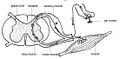 Anatomy and physiology of animals: A reflex arc


Medical Disclaimer: WikiMD is for informational purposes only and is not a substitute for professional medical advice. Content may be inaccurate or outdated and should not be used for diagnosis or treatment. Always consult your healthcare provider for medical decisions. Verify information with trusted sources such as CDC.gov and NIH.gov. By using this site, you agree that WikiMD is not liable for any outcomes related to its content. See full disclaimer.
Credits:Most images are courtesy of Wikimedia commons, and templates, categories Wikipedia, licensed under CC BY SA or similar.
Translate page: - East Asian
中文,
日本,
한국어,
South Asian
हिन्दी,
தமிழ்,
తెలుగు,
Urdu,
ಕನ್ನಡ,
Southeast Asian
Indonesian,
Vietnamese,
Thai,
မြန်မာဘာသာ,
বাংলা
European
español,
Deutsch,
français,
Greek,
português do Brasil,
polski,
română,
русский,
Nederlands,
norsk,
svenska,
suomi,
Italian
Middle Eastern & African
عربى,
Turkish,
Persian,
Hebrew,
Afrikaans,
isiZulu,
Kiswahili,
Other
Bulgarian,
Hungarian,
Czech,
Swedish,
മലയാളം,
मराठी,
ਪੰਜਾਬੀ,
ગુજરાતી,
Portuguese,
Ukrainian

