Interference theory
Interference theory is a psychological theory that explains the phenomenon of forgetting as the result of competing memories. According to this theory, the ability to remember information can be disrupted by what we have learned both before and after a given event. Interference theory is often contrasted with the decay theory, which suggests that memories fade over time due to a lack of use, rather than due to interference.
There are two main types of interference: proactive interference and retroactive interference. Proactive interference occurs when older memories inhibit the ability to remember new information. For example, if you have learned French in the past and are now trying to learn Spanish, your knowledge of French may interfere with your ability to remember Spanish vocabulary. Retroactive interference happens when new information interferes with the ability to remember older information. Using the same example, learning Spanish might make it more difficult to recall the French vocabulary you learned previously.
Interference theory has been supported by various experimental studies. One classic example is the AB-AC paradigm, where participants learn a list of word pairs (AB), and then a second list where the first word is the same but the second word is different (AC). When asked to recall the original pairs, performance is often worse than if the second list had not been learned, demonstrating retroactive interference.
The theory has significant implications for understanding how memory works and for designing educational and training programs that minimize interference. For example, spacing learning sessions apart and varying the material covered in each session can help reduce interference and improve memory retention.
Interference theory also has applications in understanding and treating memory-related disorders. For instance, strategies that reduce interference might be beneficial for individuals with memory impairment or dementia.
See also[edit]
References[edit]
 | This psychology-related article is a stub. You can help WikiMD by expanding the page. |
Interference_theory[edit]
-
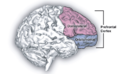 Prefrontal cortex
 -
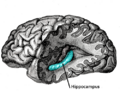 Hippocampus
 -
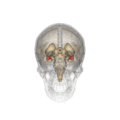 Amygdala
 -
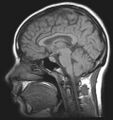 MRI brain
 -
Caudate nucleus


Sponsored Health Resource

W8MD Weight Loss, Sleep & MedSpa
Looking for physician-supervised weight loss, semaglutide, tirzepatide, or GLP-1 receptor agonist options? W8MD helps eligible patients in New York City, Brooklyn, New Jersey, Connecticut, Pennsylvania, Delaware, and greater Philadelphia with medical weight loss, sleep medicine, and long-term maintenance support.
GLP-1 specials: Affordable GLP-1 injections NYC and Philadelphia starting from $29.99/week and up for semaglutide with insurance accepted for qualifying visits, and $45/week and up for tirzepatide with insurance accepted for qualifying visits. Self-pay options start from $59.99/week and up for semaglutide and $69.99/week and up for tirzepatide.
- Medical weight loss NYC
- Affordable GLP-1 injections NYC
- Budget GLP-1 weight loss shots Philadelphia
- New Jersey medical weight loss
- NYC medical weight loss blog
- Philadelphia weight loss blog
- Sleep medicine and sleep apnea services
- W8MD MedSpa and wellness
Book a W8MD appointment · View GLP-1 specials
Paid promotional message. Eligibility, pricing, insurance coverage, medication availability, and results vary. Medical evaluation required.

Medical Disclaimer: WikiMD is for informational purposes only and is not a substitute for professional medical advice. Content may be inaccurate or outdated and should not be used for diagnosis or treatment. Always consult your healthcare provider for medical decisions. Verify information with trusted sources such as CDC.gov and NIH.gov. By using this site, you agree that WikiMD is not liable for any outcomes related to its content. See full disclaimer.
Credits:Most images are courtesy of Wikimedia commons, and templates, categories Wikipedia, licensed under CC BY SA or similar.
Translate page: - East Asian
中文,
日本,
한국어,
South Asian
हिन्दी,
தமிழ்,
తెలుగు,
Urdu,
ಕನ್ನಡ,
Southeast Asian
Indonesian,
Vietnamese,
Thai,
မြန်မာဘာသာ,
বাংলা
European
español,
Deutsch,
français,
Greek,
português do Brasil,
polski,
română,
русский,
Nederlands,
norsk,
svenska,
suomi,
Italian
Middle Eastern & African
عربى,
Turkish,
Persian,
Hebrew,
Afrikaans,
isiZulu,
Kiswahili,
Other
Bulgarian,
Hungarian,
Czech,
Swedish,
മലയാളം,
मराठी,
ਪੰਜਾਬੀ,
ગુજરાતી,
Portuguese,
Ukrainian


