Immune checkpoint
Immune checkpoints are crucial regulators of the immune system, playing a pivotal role in maintaining immune homeostasis and preventing autoimmunity. However, they also have a significant impact on cancer progression and treatment, as they can be manipulated by cancer cells to evade immune detection and destruction.
Overview[edit]
Immune checkpoints refer to a variety of inhibitory pathways hardwired into the immune system. These pathways are crucial for modulating the immune response. Under normal circumstances, immune checkpoints prevent autoimmunity by inhibiting excessive immune responses, thereby protecting tissues from damage. The most well-known checkpoints include the cytotoxic T-lymphocyte-associated protein 4 (CTLA-4), programmed death-1 (PD-1), and its ligand (PD-L1).
Function[edit]
The primary function of immune checkpoints is to ensure that immune responses are balanced. CTLA-4, for example, is expressed on T cells and transmits an inhibitory signal to T cells, reducing their proliferation and activity. Similarly, the interaction between PD-1, expressed on activated T cells, and PD-L1, expressed on cancer cells as well as some normal cells, leads to the suppression of T cell activity. This mechanism is crucial for preventing autoimmunity but can be exploited by cancer cells to avoid immune-mediated destruction.
Immune Checkpoint Inhibitors[edit]
The discovery of immune checkpoints has led to the development of immune checkpoint inhibitors, a class of drugs that block these inhibitory pathways, thereby enhancing the immune system's ability to fight cancer. These drugs have revolutionized the treatment of various cancers, including melanoma, lung cancer, and kidney cancer. Examples of immune checkpoint inhibitors include ipilimumab (which targets CTLA-4), nivolumab, and pembrolizumab (both of which target PD-1).
Clinical Implications[edit]
The use of immune checkpoint inhibitors has significantly improved the prognosis for patients with certain types of cancer. However, these treatments can also lead to immune-related adverse events (irAEs), as the enhanced immune response can attack normal tissues, leading to conditions such as colitis, hepatitis, and endocrinopathies.
Research Directions[edit]
Current research is focused on identifying new immune checkpoints and developing novel inhibitors. Additionally, there is significant interest in understanding the mechanisms underlying the resistance to checkpoint inhibitor therapy and in combining these therapies with other treatments to enhance their efficacy and overcome resistance.
Conclusion[edit]
Immune checkpoints play a critical role in regulating the immune system, with significant implications for autoimmunity and cancer. The development of immune checkpoint inhibitors has opened new avenues for cancer treatment, highlighting the importance of understanding these pathways in the context of immune regulation and therapy.
 | This medical article is a stub. You can help WikiMD by expanding the page. |
-
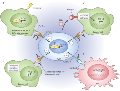 Immune checkpoints in the tumour microenvironment
 -
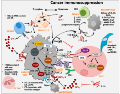 Immune checkpoints of immunosuppressive actions associated with breast cancer
 -
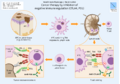 CTLA4 and PD1 Immunotherapy


Medical Disclaimer: WikiMD is for informational purposes only and is not a substitute for professional medical advice. Content may be inaccurate or outdated and should not be used for diagnosis or treatment. Always consult your healthcare provider for medical decisions. Verify information with trusted sources such as CDC.gov and NIH.gov. By using this site, you agree that WikiMD is not liable for any outcomes related to its content. See full disclaimer.
Credits:Most images are courtesy of Wikimedia commons, and templates, categories Wikipedia, licensed under CC BY SA or similar.
Translate page: - East Asian
中文,
日本,
한국어,
South Asian
हिन्दी,
தமிழ்,
తెలుగు,
Urdu,
ಕನ್ನಡ,
Southeast Asian
Indonesian,
Vietnamese,
Thai,
မြန်မာဘာသာ,
বাংলা
European
español,
Deutsch,
français,
Greek,
português do Brasil,
polski,
română,
русский,
Nederlands,
norsk,
svenska,
suomi,
Italian
Middle Eastern & African
عربى,
Turkish,
Persian,
Hebrew,
Afrikaans,
isiZulu,
Kiswahili,
Other
Bulgarian,
Hungarian,
Czech,
Swedish,
മലയാളം,
मराठी,
ਪੰਜਾਬੀ,
ગુજરાતી,
Portuguese,
Ukrainian

