Hydantoin
Hydantoin is a heterocyclic organic compound that is a type of imidazolidine. It is a white solid that is slightly soluble in water and polar organic solvents. Hydantoin is used in the synthesis of other compounds, including the anticonvulsant drugs phenytoin and ethosuximide.
Chemical Structure[edit]
Hydantoin has a five-membered ring structure, with two nitrogen atoms at positions 1 and 3, and a carbonyl group at positions 2 and 4. The compound is a tautomeric compound, meaning it can exist in two forms that are in equilibrium with each other.
Synthesis[edit]
Hydantoin can be synthesized from glycolic acid and ammonia under heat and pressure. This reaction is known as the Bucherer-Bergs reaction. Another method of synthesis is the condensation of urea with glyoxal.
Uses[edit]
Hydantoin and its derivatives are used in a variety of applications. They are used in the synthesis of pharmaceuticals, especially anticonvulsant drugs such as phenytoin and ethosuximide. They are also used as plasticizers and as additives in cosmetics.
Safety[edit]
Hydantoin is not considered highly toxic, but it can cause irritation to the skin and eyes. It is not considered a carcinogen.
See Also[edit]

This WikiMD article can only be edited by registered and verified editors. You can log in or register.
-
Hydantoin synthesis pathway
-
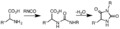 Chemical reaction involving hydantoin
 -
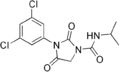 Iprodione chemical structure


Advertise on WikiMD — 81,000+ full articles, ~900,000 total pages, ~250 million page views. Global reach, limited time promotional rates from $1/page/day. Learn more · View stats

Translate page: - East Asian
中文,
日本,
한국어,
South Asian
हिन्दी,
தமிழ்,
తెలుగు,
Urdu,
ಕನ್ನಡ,
Southeast Asian
Indonesian,
Vietnamese,
Thai,
မြန်မာဘာသာ,
বাংলা
European
español,
Deutsch,
français,
Greek,
português do Brasil,
polski,
română,
русский,
Nederlands,
norsk,
svenska,
suomi,
Italian
Middle Eastern & African
عربى,
Turkish,
Persian,
Hebrew,
Afrikaans,
isiZulu,
Kiswahili,
Other
Bulgarian,
Hungarian,
Czech,
Swedish,
മലയാളം,
मराठी,
ਪੰਜਾਬੀ,
ગુજરાતી,
Portuguese,
Ukrainian
About WikiMD • Contact • Disclaimer • Privacy • Copyright • Site statistics
Some content and images may originate from Wikimedia Commons or Wikipedia and remain subject to their stated licenses. Unless otherwise noted, eligible WikiMD content is available under CC BY-SA 4.0.
WikiMD Wellnesspedia — Free health & wellness information for patients, students, and health professionals.


