Humorism

Humorism, or humoralism, is an ancient medical system that centers around the composition and mechanisms of the human body. Established by ancient Greek philosophers and physicians, this theory postulates that the health and temperament of an individual are governed by the balance of four vital body fluids or "humors". The unique composition and balance of these humors were believed to influence each person's physical health and mental temperament, thereby creating a highly individualistic approach to healthcare.
The Four Humors[edit]
Humoral theory identifies four distinct body fluids: blood, black bile, yellow bile, and phlegm. These humors were believed to correlate to the four elements (air, earth, fire, and water), and each was associated with a specific temperament and set of characteristics:
- Blood (Air): Considered the life-giving humor, blood was associated with a sanguine temperament, characterized by optimism, sociability, and enthusiasm.
- Black bile (Earth): An excess of black bile was believed to lead to a melancholic temperament, characterized by introspection, creativity, and a tendency towards depression.
- Yellow bile (Fire): Tied to a choleric temperament, individuals with a predominance of yellow bile were believed to be ambitious, passionate, and quick to anger.
- Phlegm (Water): Those with a surplus of phlegm were believed to exhibit a phlegmatic temperament, being calm, thoughtful, and patient.
Humorism in Medical Practice[edit]
Humoral medicine encompassed a holistic approach to health, bridging mental and physical processes. Treatment usually involved measures to balance the humors, often through diet, exercise, bloodletting, or the administration of purgatives.
This theory profoundly influenced Greek, Roman, and Persian physicians, becoming the predominant medical philosophy in these cultures. It remained the most widely accepted view of the human body and disease among physicians until the advent of modern medical research in the 19th century.
Modern Relevance[edit]
While humorism has been superseded by more accurate biomedical understanding of the body and disease, it nonetheless played a crucial role in the history of medicine. Its influence can still be seen in some language used in modern medicine, for example, "biliary" conditions (relating to bile). Despite its obsolescence in contemporary healthcare, studying humorism provides insight into the evolution of medical thought and practice.
References[edit]
<references/>
See Also[edit]
| This article is a stub. You can help WikiMD by registering to expand it. |
Humorism[edit]
-
 Quinta Essentia (Thurneisse) illustration Alchemic approach to four humors in relation to the four elements and zodiacal signs
 -
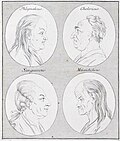 Lavater 1792
 -
 Humorism
_illustration_Alchemic_approach_to_four_humors_in_relation_to_the_four_elements_and_zodiacal_signs.jpg)


Ad. Transform your life with W8MD's
GLP-1 weight loss injections special from $29.99 with insurance
|
WikiMD Medical Encyclopedia |
Medical Disclaimer: WikiMD is for informational purposes only and is not a substitute for professional medical advice. Content may be inaccurate or outdated and should not be used for diagnosis or treatment. Always consult your healthcare provider for medical decisions. Verify information with trusted sources such as CDC.gov and NIH.gov. By using this site, you agree that WikiMD is not liable for any outcomes related to its content. See full disclaimer.
Credits:Most images are courtesy of Wikimedia commons, and templates, categories Wikipedia, licensed under CC BY SA or similar.
Translate this page: - East Asian
中文,
日本,
한국어,
South Asian
हिन्दी,
தமிழ்,
తెలుగు,
Urdu,
ಕನ್ನಡ,
Southeast Asian
Indonesian,
Vietnamese,
Thai,
မြန်မာဘာသာ,
বাংলা
European
español,
Deutsch,
français,
Greek,
português do Brasil,
polski,
română,
русский,
Nederlands,
norsk,
svenska,
suomi,
Italian
Middle Eastern & African
عربى,
Turkish,
Persian,
Hebrew,
Afrikaans,
isiZulu,
Kiswahili,
Other
Bulgarian,
Hungarian,
Czech,
Swedish,
മലയാളം,
मराठी,
ਪੰਜਾਬੀ,
ગુજરાતી,
Portuguese,
Ukrainian
