Neck
The neck is the part of the body that separates the head from the torso. It contains various blood vessels and nerves that supply structures mainly in the head and neck. The neck is also involved in several important functions such as breathing, swallowing, and speaking.
Anatomy[edit]
The neck is made up of several structures including the vertebral column, nerves, muscles, and skin. The vertebral column in the neck is made up of seven bones called the cervical vertebrae. These bones protect the spinal cord and provide support for the head.
The neck also contains several muscles that are responsible for movement of the head and neck. These muscles include the sternocleidomastoid, trapezius, and the scalene muscles.
Function[edit]
The neck has several important functions. It supports the weight of the head and allows it to move in different directions. The neck also contains the larynx, which is involved in speech and swallowing. The thyroid gland, which is located in the neck, produces hormones that regulate metabolism.
Clinical significance[edit]
There are several medical conditions that can affect the neck. These include neck pain, whiplash, and thyroid disease. Neck pain can be caused by a variety of factors including poor posture, stress, and injury. Whiplash is a common injury that occurs when the neck is suddenly jerked back and forth. Thyroid disease can cause a variety of symptoms including fatigue, weight gain, and depression.
See also[edit]
References[edit]

This WikiMD article can only be edited by registered and verified editors. You can log in or register.
-
 Neck
Neck -
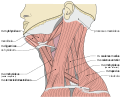 Muscles of the neck
 -
 Neck
Neck -
 Tiger's neck
 -
 Giraffe's neck


Medical Disclaimer: WikiMD is for informational purposes only and is not a substitute for professional medical advice. Content may be inaccurate or outdated and should not be used for diagnosis or treatment. Always consult your healthcare provider for medical decisions. Verify information with trusted sources such as CDC.gov and NIH.gov. By using this site, you agree that WikiMD is not liable for any outcomes related to its content. See full disclaimer.
Credits:Most images are courtesy of Wikimedia commons, and templates, categories Wikipedia, licensed under CC BY SA or similar.
Translate page: - East Asian
中文,
日本,
한국어,
South Asian
हिन्दी,
தமிழ்,
తెలుగు,
Urdu,
ಕನ್ನಡ,
Southeast Asian
Indonesian,
Vietnamese,
Thai,
မြန်မာဘာသာ,
বাংলা
European
español,
Deutsch,
français,
Greek,
português do Brasil,
polski,
română,
русский,
Nederlands,
norsk,
svenska,
suomi,
Italian
Middle Eastern & African
عربى,
Turkish,
Persian,
Hebrew,
Afrikaans,
isiZulu,
Kiswahili,
Other
Bulgarian,
Hungarian,
Czech,
Swedish,
മലയാളം,
मराठी,
ਪੰਜਾਬੀ,
ગુજરાતી,
Portuguese,
Ukrainian

