Hematopoietic stem cell transplantation
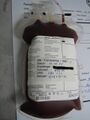
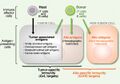
Hematopoietic stem cell transplantation (HSCT) is a medical procedure in the field of hematology and oncology that involves the intravenous infusion of stem cells to reestablish hematopoietic function in patients whose bone marrow or immune system is damaged or defective.
Types of HSCT[edit]
There are two main types of HSCT, which are distinguished by the source of the stem cells:
- Autologous HSCT involves the use of a patient's own stem cells.
- Allogeneic HSCT involves the use of stem cells from a donor.
Procedure[edit]
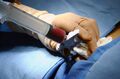
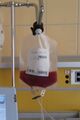
The procedure for HSCT typically involves the administration of high-dose chemotherapy or radiation therapy to eradicate the patient's diseased bone marrow. This is followed by the infusion of the stem cells into the patient's bloodstream, where they migrate to the bone marrow and begin to produce new blood cells.
Applications[edit]
HSCT is used to treat a variety of conditions, including leukemia, lymphoma, multiple myeloma, neuroblastoma, and certain immune deficiency diseases.
Risks and Complications[edit]
HSCT carries several risks and potential complications, including infection, graft-versus-host disease (GVHD), organ damage, and infertility.
See Also[edit]
References[edit]

This WikiMD article can only be edited by registered and verified editors. You can log in or register.
-
 Hematopoietic stem cell transplantation
 -
 Hematopoietic stem cell transplantation
 -
 Hematopoietic stem cell transplantation
 -
 Hematopoietic stem cell transplantation


Advertise on WikiMD — 81,000+ full articles, ~900,000 total pages, ~250 million page views. Global reach, limited time promotional rates from $1/page/day. Learn more · View stats

Translate page: - East Asian
中文,
日本,
한국어,
South Asian
हिन्दी,
தமிழ்,
తెలుగు,
Urdu,
ಕನ್ನಡ,
Southeast Asian
Indonesian,
Vietnamese,
Thai,
မြန်မာဘာသာ,
বাংলা
European
español,
Deutsch,
français,
Greek,
português do Brasil,
polski,
română,
русский,
Nederlands,
norsk,
svenska,
suomi,
Italian
Middle Eastern & African
عربى,
Turkish,
Persian,
Hebrew,
Afrikaans,
isiZulu,
Kiswahili,
Other
Bulgarian,
Hungarian,
Czech,
Swedish,
മലയാളം,
मराठी,
ਪੰਜਾਬੀ,
ગુજરાતી,
Portuguese,
Ukrainian
About WikiMD • Contact • Disclaimer • Privacy • Copyright • Site statistics
Some content and images may originate from Wikimedia Commons or Wikipedia and remain subject to their stated licenses. Unless otherwise noted, eligible WikiMD content is available under CC BY-SA 4.0.
WikiMD Wellnesspedia — Free health & wellness information for patients, students, and health professionals.

