Hairstyle
Hairstyle or hairdo refers to the styling of hair, usually on the human scalp. Sometimes, this could also mean an editing of facial or body hair. The fashioning of hair can be considered an aspect of personal grooming, fashion, and cosmetics, although practical, cultural, and popular considerations also influence some hairstyles.Cite error: Invalid <ref> tag; refs with no name must have content
History[edit]
The oldest known depiction of hair styling is hair braiding which dates back about 30,000 years. In history, women's hair was often elaborately and carefully dressed in special ways. From the time of the Roman Empire[citation needed] until the Middle Ages, most women grew their hair as long as it would naturally grow.
Types of Hairstyles[edit]
There are all sorts of hairstyles used in various cultures around the world. Hairstyles can be categorized into three main types:
- Short Hair: Short hair for fashionable men was a product of the Neoclassical movement.
- Medium Hair: During the 15th and 16th centuries, European men wore their hair cropped no longer than shoulder-length, with very fashionable men wearing bangs or fringes.
- Long Hair: For women, the hairstyles became more elaborate as time passed during the Victorian era.
Cultural Impact[edit]
Hairstyles have cultural, social, and ethnic meanings. They can also reflect a person's personality, social class, racial identification, marital status, religion, wealth, and age.
See Also[edit]
References[edit]

This WikiMD article can only be edited by registered and verified editors. You can log in or register.
-
 Old Chinese woman with elaborate hair style
 -
Traditional Japanese wedding hairstyle
-
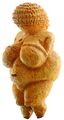 Venus von Willendorf
 -
Venus of Brassempouy
-
Reconstructed Sumerian headgear necklaces
-
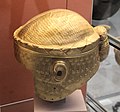 Meskalamdug helmet
 -
Sumerian portrait statuette of a woman
-
Statue from Khafajah, female worshiper
-
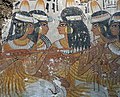 Egyptian lute players
 -
 MET h1 1990.281
 -
 Chandraketugarth, epoca sunga, dea della fecondità
 -
Woman with a mirror, China, Eastern Han dynasty


Medical Disclaimer: WikiMD is for informational purposes only and is not a substitute for professional medical advice. Content may be inaccurate or outdated and should not be used for diagnosis or treatment. Always consult your healthcare provider for medical decisions. Verify information with trusted sources such as CDC.gov and NIH.gov. By using this site, you agree that WikiMD is not liable for any outcomes related to its content. See full disclaimer.
Credits:Most images are courtesy of Wikimedia commons, and templates, categories Wikipedia, licensed under CC BY SA or similar.
Translate page: - East Asian
中文,
日本,
한국어,
South Asian
हिन्दी,
தமிழ்,
తెలుగు,
Urdu,
ಕನ್ನಡ,
Southeast Asian
Indonesian,
Vietnamese,
Thai,
မြန်မာဘာသာ,
বাংলা
European
español,
Deutsch,
français,
Greek,
português do Brasil,
polski,
română,
русский,
Nederlands,
norsk,
svenska,
suomi,
Italian
Middle Eastern & African
عربى,
Turkish,
Persian,
Hebrew,
Afrikaans,
isiZulu,
Kiswahili,
Other
Bulgarian,
Hungarian,
Czech,
Swedish,
മലയാളം,
मराठी,
ਪੰਜਾਬੀ,
ગુજરાતી,
Portuguese,
Ukrainian


