HIV disease–related drug reaction
HIV disease–related drug reaction is a medical condition that occurs as a result of adverse reactions to medications used in the treatment of HIV (Human Immunodeficiency Virus). This condition can manifest in various ways, including skin rashes, liver damage, and other serious health complications.
Overview[edit]
HIV is a virus that attacks the body's immune system, making it difficult for the body to fight off infections and diseases. Medications used to treat HIV, known as antiretroviral therapy (ART), can sometimes cause adverse reactions in patients. These reactions are referred to as HIV disease–related drug reactions.
Causes[edit]
HIV disease–related drug reactions can be caused by a variety of factors. These include the type of medication used, the dosage, the patient's overall health, and the patient's individual response to the medication. Some medications used in ART are more likely to cause adverse reactions than others.
Symptoms[edit]
The symptoms of HIV disease–related drug reactions can vary widely, depending on the specific reaction and the medication causing it. Common symptoms can include skin rashes, fever, nausea, vomiting, diarrhea, and liver damage. In severe cases, these reactions can be life-threatening.
Treatment[edit]
Treatment for HIV disease–related drug reactions typically involves changing the medication causing the reaction. In some cases, additional treatments may be necessary to manage the symptoms of the reaction. It's important for patients to communicate any adverse reactions to their healthcare provider as soon as possible.
Prevention[edit]
Preventing HIV disease–related drug reactions involves careful monitoring of the patient's response to medication. Regular check-ups and blood tests can help detect any adverse reactions early, allowing for prompt treatment and changes to the medication regimen if necessary.
See Also[edit]

This WikiMD article can only be edited by registered and verified editors. You can log in or register.
-
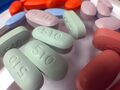 HIV disease–related drug reaction
.jpg)

Medical Disclaimer: WikiMD is for informational purposes only and is not a substitute for professional medical advice. Content may be inaccurate or outdated and should not be used for diagnosis or treatment. Always consult your healthcare provider for medical decisions. Verify information with trusted sources such as CDC.gov and NIH.gov. By using this site, you agree that WikiMD is not liable for any outcomes related to its content. See full disclaimer.
Credits:Most images are courtesy of Wikimedia commons, and templates, categories Wikipedia, licensed under CC BY SA or similar.
Translate page: - East Asian
中文,
日本,
한국어,
South Asian
हिन्दी,
தமிழ்,
తెలుగు,
Urdu,
ಕನ್ನಡ,
Southeast Asian
Indonesian,
Vietnamese,
Thai,
မြန်မာဘာသာ,
বাংলা
European
español,
Deutsch,
français,
Greek,
português do Brasil,
polski,
română,
русский,
Nederlands,
norsk,
svenska,
suomi,
Italian
Middle Eastern & African
عربى,
Turkish,
Persian,
Hebrew,
Afrikaans,
isiZulu,
Kiswahili,
Other
Bulgarian,
Hungarian,
Czech,
Swedish,
മലയാളം,
मराठी,
ਪੰਜਾਬੀ,
ગુજરાતી,
Portuguese,
Ukrainian

