Graphics processing unit
Graphics processing unit (GPU) is a specialized electronic circuit designed to rapidly manipulate and alter memory to accelerate the creation of images in a frame buffer intended for output to a display device. GPUs are used in embedded systems, mobile phones, personal computers, workstations, and game consoles.
History[edit]
The term GPU was popularized by Nvidia in 1999, who marketed the GeForce 256 as "the world's first GPU". It was presented as a "single-chip processor with integrated transform, lighting, triangle setup/clipping, and rendering engines". However, GPUs were being used in most gaming consoles long before that.
Architecture[edit]
Modern GPUs are very efficient at manipulating computer graphics and image processing. Their highly parallel structure makes them more effective than general-purpose CPUs for algorithms where the processing of large blocks of data is done in parallel. In a personal computer, a GPU can be present on a video card or embedded on the Motherboard. In certain CPUs, they are embedded on the CPU die.
Performance[edit]
The performance of a GPU is determined by several factors, including the clock rate, the number of cores, the architecture, and the type of memory used. High-performance GPUs often consume significant amounts of electrical power, creating additional heat and noise, and requiring more effective cooling solutions.
Applications[edit]
GPUs are used in a variety of applications, from rendering video and graphics in games to performing complex calculations in the fields of AI and Machine learning. They are also used in Cryptocurrency mining, where their high-performance capabilities can be utilized to solve complex mathematical problems.
See also[edit]
 | This computer hardware article is a stub. You can help WikiMD by expanding the page. |
 | This computer graphics–related article is a stub. You can help WikiMD by expanding the page. |
-
 Graphics processing unit
 -
 ANTIC chip on an Atari 130XE motherboard
 -
 NEC D7220
 -
 IBM 8514
 -
 IBM VGA 90X8941 on PS/55
 -
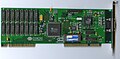 Diamond Stealth 32
 -
 Diamond Stealth 3D 2000
 -
 Voodoo3 2000 AGP
 -
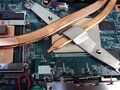 AMD HD5470 GPU
 -
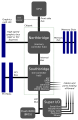 Graphics processing unit
 -
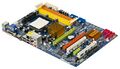 A790GXH-128M Motherboard


Medical Disclaimer: WikiMD is for informational purposes only and is not a substitute for professional medical advice. Content may be inaccurate or outdated and should not be used for diagnosis or treatment. Always consult your healthcare provider for medical decisions. Verify information with trusted sources such as CDC.gov and NIH.gov. By using this site, you agree that WikiMD is not liable for any outcomes related to its content. See full disclaimer.
Credits:Most images are courtesy of Wikimedia commons, and templates, categories Wikipedia, licensed under CC BY SA or similar.
Translate page: - East Asian
中文,
日本,
한국어,
South Asian
हिन्दी,
தமிழ்,
తెలుగు,
Urdu,
ಕನ್ನಡ,
Southeast Asian
Indonesian,
Vietnamese,
Thai,
မြန်မာဘာသာ,
বাংলা
European
español,
Deutsch,
français,
Greek,
português do Brasil,
polski,
română,
русский,
Nederlands,
norsk,
svenska,
suomi,
Italian
Middle Eastern & African
عربى,
Turkish,
Persian,
Hebrew,
Afrikaans,
isiZulu,
Kiswahili,
Other
Bulgarian,
Hungarian,
Czech,
Swedish,
മലയാളം,
मराठी,
ਪੰਜਾਬੀ,
ગુજરાતી,
Portuguese,
Ukrainian

