Glutathione synthetase
Glutathione Synthetase is an enzyme crucial in the biosynthesis of glutathione, a tripeptide that plays a significant role in cellular detoxification and antioxidant defense. This enzyme catalyzes the ATP-dependent condensation of gamma-glutamylcysteine and glycine, producing glutathione. The process is essential for maintaining the intracellular health and protecting the cell from oxidative stress.
Function[edit]
Glutathione synthetase is part of the glutathione metabolism pathway, which is vital for reducing oxidative stress within the cell. Glutathione, the product of the reaction catalyzed by glutathione synthetase, is a major antioxidant. It helps in neutralizing reactive oxygen species (ROS) and maintaining the redox state of the cell. Furthermore, glutathione is involved in the detoxification of xenobiotics, metabolism of carcinogens, and synthesis and repair of DNA.
Genetic and Molecular Basis[edit]
The enzyme is encoded by the GSS gene in humans. Mutations in the GSS gene can lead to glutathione synthetase deficiency, a rare autosomal recessive disorder. This condition is characterized by low levels of glutathione, leading to hemolytic anemia, metabolic acidosis, and progressive damage to the central nervous system.
Clinical Significance[edit]
Glutathione synthetase deficiency is categorized into mild, moderate, and severe forms, based on the enzyme activity level and clinical manifestations. Patients with severe forms may exhibit neurological symptoms, such as ataxia, intellectual disability, and seizures. Diagnosis is typically made through biochemical assays measuring enzyme activity and glutathione levels in red blood cells, and confirmed by genetic testing.
Management of glutathione synthetase deficiency involves supportive care, antioxidant supplementation, and treatment of metabolic acidosis. Early diagnosis and intervention are crucial to prevent or mitigate neurological damage.
Research Directions[edit]
Research on glutathione synthetase and its associated pathways continues to uncover its broader implications in health and disease. Studies are exploring its role in aging, cancer, neurodegenerative diseases, and resistance to chemotherapy. Understanding the regulation of glutathione synthesis and its impact on cellular physiology could lead to novel therapeutic strategies for diseases associated with oxidative stress.
See Also[edit]
References[edit]
.svg) | This biochemistry article is a stub. You can help WikiMD by expanding the page. |
-
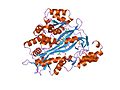 Structure of Glutathione synthetase
 -
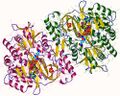 Glutathione synthetase model
 -
 Structure of Glutathione synthetase
 -
 Key residues that interact with ADP within the active site
 -
 Overall synthesis reaction of GSH
 -
 Glutathione synthetase in mitochondria


Medical Disclaimer: WikiMD is for informational purposes only and is not a substitute for professional medical advice. Content may be inaccurate or outdated and should not be used for diagnosis or treatment. Always consult your healthcare provider for medical decisions. Verify information with trusted sources such as CDC.gov and NIH.gov. By using this site, you agree that WikiMD is not liable for any outcomes related to its content. See full disclaimer.
Credits:Most images are courtesy of Wikimedia commons, and templates, categories Wikipedia, licensed under CC BY SA or similar.
Translate page: - East Asian
中文,
日本,
한국어,
South Asian
हिन्दी,
தமிழ்,
తెలుగు,
Urdu,
ಕನ್ನಡ,
Southeast Asian
Indonesian,
Vietnamese,
Thai,
မြန်မာဘာသာ,
বাংলা
European
español,
Deutsch,
français,
Greek,
português do Brasil,
polski,
română,
русский,
Nederlands,
norsk,
svenska,
suomi,
Italian
Middle Eastern & African
عربى,
Turkish,
Persian,
Hebrew,
Afrikaans,
isiZulu,
Kiswahili,
Other
Bulgarian,
Hungarian,
Czech,
Swedish,
മലയാളം,
मराठी,
ਪੰਜਾਬੀ,
ગુજરાતી,
Portuguese,
Ukrainian

