G2 phase
G2 phase is the third, penultimate phase of the cell cycle, the sequence of events that a cell goes through as it grows and divides. The G2 phase directly precedes the M phase, during which the cell actually splits into two daughter cells.
Overview[edit]
The G2 phase follows the S phase, during which the cell's DNA is replicated. During the G2 phase, the cell undergoes the final preparations for mitosis. This includes the synthesis of proteins necessary for mitosis and the checking and repair of the replicated DNA.
Duration[edit]
The length of the G2 phase can vary greatly, but on average it lasts about 4 to 5 hours in mammalian cells. In some cells, the G2 phase is omitted entirely, allowing the cell to proceed directly from S phase to mitosis.
Regulation[edit]
The progression of the cell cycle, including the transition from G2 phase to mitosis, is tightly regulated by a complex network of proteins. These include cyclins, cyclin-dependent kinases (CDKs), and checkpoint kinases, among others. Disruptions in this regulatory network can lead to uncontrolled cell growth and division, a hallmark of cancer.
See also[edit]
References[edit]

This WikiMD article can only be edited by registered and verified editors. You can log in or register.
-
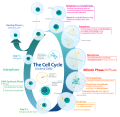 Diagram of the animal cell cycle
 -
Human karyotype with bands and sub-bands
-
G2-M feedback loops
-
G2-M Bistability


Medical Disclaimer: WikiMD is for informational purposes only and is not a substitute for professional medical advice. Content may be inaccurate or outdated and should not be used for diagnosis or treatment. Always consult your healthcare provider for medical decisions. Verify information with trusted sources such as CDC.gov and NIH.gov. By using this site, you agree that WikiMD is not liable for any outcomes related to its content. See full disclaimer.
Credits:Most images are courtesy of Wikimedia commons, and templates, categories Wikipedia, licensed under CC BY SA or similar.
Translate page: - East Asian
中文,
日本,
한국어,
South Asian
हिन्दी,
தமிழ்,
తెలుగు,
Urdu,
ಕನ್ನಡ,
Southeast Asian
Indonesian,
Vietnamese,
Thai,
မြန်မာဘာသာ,
বাংলা
European
español,
Deutsch,
français,
Greek,
português do Brasil,
polski,
română,
русский,
Nederlands,
norsk,
svenska,
suomi,
Italian
Middle Eastern & African
عربى,
Turkish,
Persian,
Hebrew,
Afrikaans,
isiZulu,
Kiswahili,
Other
Bulgarian,
Hungarian,
Czech,
Swedish,
മലയാളം,
मराठी,
ਪੰਜਾਬੀ,
ગુજરાતી,
Portuguese,
Ukrainian


