Florina pepper
| Alternative names | |
| Type | |
| Course | |
| Place of origin | |
| Region or state | |
| Associated national cuisine | |
| Created by | |
| Invented | |
| Cooking time | minutes to minutes |
| Serving temperature | |
| Main ingredients | |
| Ingredients generally used | |
| Variations | |
| Food energy | kcal |
| Nutritional value | Protein: g, Fat: g, Carbohydrate: g |
| Glycemic index | |
| Similar dishes | |
| Other information | |
| Website | [ Official website] |
Florina pepper is a variety of pepper that is native to the region of Florina in Greece. It belongs to the species Capsicum annuum and is known for its mild to medium heat and sweet and tangy flavor.
Description[edit]
Florina pepper is a medium-sized pepper that typically measures around 4 to 5 inches in length. It has a thick flesh and a distinctive elongated shape. The pepper starts off green and matures into a vibrant red color. The skin of the pepper is smooth and shiny.
Culinary Uses[edit]
Florina pepper is widely used in Greek cuisine, particularly in the region of Florina. It is a key ingredient in many traditional dishes, adding a unique flavor and color to the recipes. The pepper is often roasted, grilled, or stuffed with various fillings such as cheese, rice, or meat. It can also be used in salads, sauces, and soups.
Health Benefits[edit]
Like other peppers, Florina pepper is rich in vitamins and minerals. It is a good source of vitamin C, vitamin A, and potassium. It also contains antioxidants that help protect the body against free radicals. Consuming Florina pepper may contribute to a healthy immune system, improved digestion, and overall well-being.
Availability[edit]
Florina pepper is primarily grown and consumed in the region of Florina in Greece. However, it is also exported to other countries, allowing people from different parts of the world to enjoy its unique taste. It can be found in specialty grocery stores or purchased online.
See Also[edit]
References[edit]
-
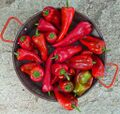 Florina_pepper


Medical Disclaimer: WikiMD is for informational purposes only and is not a substitute for professional medical advice. Content may be inaccurate or outdated and should not be used for diagnosis or treatment. Always consult your healthcare provider for medical decisions. Verify information with trusted sources such as CDC.gov and NIH.gov. By using this site, you agree that WikiMD is not liable for any outcomes related to its content. See full disclaimer.
Credits:Most images are courtesy of Wikimedia commons, and templates, categories Wikipedia, licensed under CC BY SA or similar.
Translate page: - East Asian
中文,
日本,
한국어,
South Asian
हिन्दी,
தமிழ்,
తెలుగు,
Urdu,
ಕನ್ನಡ,
Southeast Asian
Indonesian,
Vietnamese,
Thai,
မြန်မာဘာသာ,
বাংলা
European
español,
Deutsch,
français,
Greek,
português do Brasil,
polski,
română,
русский,
Nederlands,
norsk,
svenska,
suomi,
Italian
Middle Eastern & African
عربى,
Turkish,
Persian,
Hebrew,
Afrikaans,
isiZulu,
Kiswahili,
Other
Bulgarian,
Hungarian,
Czech,
Swedish,
മലയാളം,
मराठी,
ਪੰਜਾਬੀ,
ગુજરાતી,
Portuguese,
Ukrainian

