Fiadone
Fiadone is a type of cheese cake or dessert that originates from the island of Corsica. It is a traditional dish that is often served during Easter celebrations. The main ingredients of Fiadone are brocciu, a type of Corsican cheese, eggs, sugar, and lemon zest.
History[edit]
Fiadone has a long history in Corsica, with the first recorded mention of the dish dating back to the 16th century. It is believed to have been introduced to the island by the Romans, who brought with them the tradition of cheese-making. Over the centuries, Fiadone has become a staple of Corsican cuisine and is now considered a symbol of the island's culinary heritage.
Preparation[edit]
The preparation of Fiadone involves several steps. First, the brocciu cheese is mixed with eggs, sugar, and lemon zest to create a smooth, creamy filling. This mixture is then poured into a buttered baking dish and baked until it is golden brown and firm to the touch. The finished Fiadone is typically served chilled and can be enjoyed either as a dessert or as a light snack.
Variations[edit]
While the traditional Fiadone recipe calls for brocciu cheese, there are many variations of the dish that use different types of cheese. Some versions of Fiadone also include additional ingredients such as honey, vanilla, or almonds. In addition, Fiadone can be made in various shapes and sizes, ranging from small, individual portions to large, family-sized cakes.
Cultural Significance[edit]
Fiadone is more than just a dessert in Corsica; it is a part of the island's cultural identity. The dish is often served at family gatherings and special occasions, and is a common sight at Easter feasts. In recent years, Fiadone has also gained popularity outside of Corsica, with many restaurants and bakeries in mainland France and other countries offering their own versions of the dish.
This <a href="/wiki/Corsica" title="Corsica">Corsica</a>-related article is a <a href="/wiki/Stub" title="Stub">stub</a>. You can help <a href="/wiki/WikiMD" title="WikiMD">WikiMD</a> by expanding it.
 | This cheese-related article is a stub. You can help WikiMD by expanding the page. |

Fiadone[edit]
-
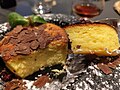 Corsican fiadone
 -
 Fiadone


Medical Disclaimer: WikiMD is for informational purposes only and is not a substitute for professional medical advice. Content may be inaccurate or outdated and should not be used for diagnosis or treatment. Always consult your healthcare provider for medical decisions. Verify information with trusted sources such as CDC.gov and NIH.gov. By using this site, you agree that WikiMD is not liable for any outcomes related to its content. See full disclaimer.
Credits:Most images are courtesy of Wikimedia commons, and templates, categories Wikipedia, licensed under CC BY SA or similar.
Translate page: - East Asian
中文,
日本,
한국어,
South Asian
हिन्दी,
தமிழ்,
తెలుగు,
Urdu,
ಕನ್ನಡ,
Southeast Asian
Indonesian,
Vietnamese,
Thai,
မြန်မာဘာသာ,
বাংলা
European
español,
Deutsch,
français,
Greek,
português do Brasil,
polski,
română,
русский,
Nederlands,
norsk,
svenska,
suomi,
Italian
Middle Eastern & African
عربى,
Turkish,
Persian,
Hebrew,
Afrikaans,
isiZulu,
Kiswahili,
Other
Bulgarian,
Hungarian,
Czech,
Swedish,
മലയാളം,
मराठी,
ਪੰਜਾਬੀ,
ગુજરાતી,
Portuguese,
Ukrainian

