Iron(III) oxide
Iron(III) oxide is an inorganic compound with the chemical formula Fe2O3. It is one of several iron oxides, the most common of which is iron(II,III) oxide (Fe3O4), which contains both Fe(II) and Fe(III) ions. Iron(III) oxide is also known as ferric oxide and is a reddish-brown solid that is insoluble in water. It occurs naturally as the mineral hematite, which is mined as the main ore of iron. It is used in various applications, from pigments in paints and cosmetics to catalysts in the synthesis of ammonia.
Properties[edit]
Iron(III) oxide is an amphoteric oxide, meaning it can react with both acids and bases. When heated with acids, it forms iron(III) salts, and when treated with alkaline solutions, it can yield iron(III) hydroxide. It is insoluble in water but dissolves readily in hydrochloric acid and sulfuric acid, forming corresponding iron(III) salts.
Synthesis[edit]
Iron(III) oxide can be synthesized in the laboratory by thermal decomposition of iron(III) hydroxide or iron(III) nitrate:
- 2 Fe(NO3)3 → 2 Fe2O3 + 6 NO2 + O2
- 2 Fe(OH)3 → Fe2O3 + 3 H2O
Commercially, it is produced on a large scale by the thermal decomposition of iron(III) sulfate.
Applications[edit]
Pigments[edit]
Iron(III) oxide is widely used as a pigment. Its natural form, hematite, gives a reddish color and is used in red ochre. Synthetic iron(III) oxide pigments are used in coatings, paints, and colored concretes.
Catalysis[edit]
It serves as a catalyst in the Haber-Bosch process for ammonia synthesis and in the water-gas shift reaction, which is essential for hydrogen production.
Magnetic Recording[edit]
Iron(III) oxide has been used in magnetic recording media, although it has largely been replaced by cobalt-modified iron oxides and other materials.
Health and Safety[edit]
While iron(III) oxide is not considered highly toxic, inhalation of its dust or fumes can cause irritation of the respiratory tract. In the workplace, exposure limits are set to ensure worker safety.
Environmental Impact[edit]
Iron(III) oxide is a naturally occurring mineral and is not regarded as harmful to the environment. However, mining and processing activities can have environmental impacts, including habitat destruction and water pollution.
See Also[edit]

-
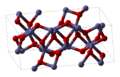 Haematite unit cell 3D balls
 -
 Iron oxide red
 -
 Iron oxide yellow


Medical Disclaimer: WikiMD is for informational purposes only and is not a substitute for professional medical advice. Content may be inaccurate or outdated and should not be used for diagnosis or treatment. Always consult your healthcare provider for medical decisions. Verify information with trusted sources such as CDC.gov and NIH.gov. By using this site, you agree that WikiMD is not liable for any outcomes related to its content. See full disclaimer.
Credits:Most images are courtesy of Wikimedia commons, and templates, categories Wikipedia, licensed under CC BY SA or similar.
Translate page: - East Asian
中文,
日本,
한국어,
South Asian
हिन्दी,
தமிழ்,
తెలుగు,
Urdu,
ಕನ್ನಡ,
Southeast Asian
Indonesian,
Vietnamese,
Thai,
မြန်မာဘာသာ,
বাংলা
European
español,
Deutsch,
français,
Greek,
português do Brasil,
polski,
română,
русский,
Nederlands,
norsk,
svenska,
suomi,
Italian
Middle Eastern & African
عربى,
Turkish,
Persian,
Hebrew,
Afrikaans,
isiZulu,
Kiswahili,
Other
Bulgarian,
Hungarian,
Czech,
Swedish,
മലയാളം,
मराठी,
ਪੰਜਾਬੀ,
ગુજરાતી,
Portuguese,
Ukrainian

