Aziridine
Aziridine is an organic compound with the formula C2H5N. It is a saturated heterocyclic compound that contains a three-membered ring structure. This compound is also known as ethyleneimine or dimethylenimine.
Structure and Bonding[edit]
Aziridine has a three-membered ring, which is the smallest cyclic structure that can exist. This small ring size leads to significant ring strain, making aziridines more reactive than other cyclic amines such as pyrrolidine and piperidine. The nitrogen atom in aziridine is sp3 hybridized, meaning it forms three sigma bonds and has one lone pair of electrons.
Synthesis[edit]
Aziridines can be synthesized through several methods. One common method is the reaction of an alkene with a haloamine in the presence of a base. This is known as the Gabriel synthesis. Another method is the cyclization of a haloamine with a base, known as the Baldwin cyclization.
Reactions[edit]
Due to the ring strain, aziridines are highly reactive. They can undergo ring-opening reactions with nucleophiles, leading to the formation of amines and alcohols. They can also undergo reactions with electrophiles, leading to the formation of aziridinium ions, which can then be attacked by nucleophiles to form substituted aziridines.
Applications[edit]
Aziridines are used in the synthesis of a variety of organic compounds. They are used as building blocks in the synthesis of alkaloids, amino acids, and peptides. They are also used in the production of polymers, where they can act as cross-linking agents.
Safety[edit]
Aziridines are highly reactive and can be hazardous. They can cause burns and eye damage, and prolonged exposure can lead to respiratory problems. Therefore, they should be handled with care, using appropriate safety equipment.
See Also[edit]

Aziridine gallery[edit]
-
 Aziridine.svg
 -
 Aziridine3d.png
 -
 Linear PEI
 -
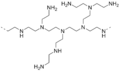 Branched PEI


Medical Disclaimer: WikiMD is for informational purposes only and is not a substitute for professional medical advice. Content may be inaccurate or outdated and should not be used for diagnosis or treatment. Always consult your healthcare provider for medical decisions. Verify information with trusted sources such as CDC.gov and NIH.gov. By using this site, you agree that WikiMD is not liable for any outcomes related to its content. See full disclaimer.
Credits:Most images are courtesy of Wikimedia commons, and templates, categories Wikipedia, licensed under CC BY SA or similar.
Translate page: - East Asian
中文,
日本,
한국어,
South Asian
हिन्दी,
தமிழ்,
తెలుగు,
Urdu,
ಕನ್ನಡ,
Southeast Asian
Indonesian,
Vietnamese,
Thai,
မြန်မာဘာသာ,
বাংলা
European
español,
Deutsch,
français,
Greek,
português do Brasil,
polski,
română,
русский,
Nederlands,
norsk,
svenska,
suomi,
Italian
Middle Eastern & African
عربى,
Turkish,
Persian,
Hebrew,
Afrikaans,
isiZulu,
Kiswahili,
Other
Bulgarian,
Hungarian,
Czech,
Swedish,
മലയാളം,
मराठी,
ਪੰਜਾਬੀ,
ગુજરાતી,
Portuguese,
Ukrainian

