Environmental radioactivity
Environmental radioactivity is the occurrence of radioactive materials in the natural environment. Radioactive materials are present in the environment due to both natural and artificial sources. The study of environmental radioactivity involves understanding the nature of these radioactive materials, their sources, and their effects on the environment and living organisms.
Sources of Environmental Radioactivity[edit]
Environmental radioactivity originates from two main sources: natural and artificial.
Natural Sources[edit]
Natural sources of radioactivity include cosmic radiation, terrestrial radiation, and internal radiation. Cosmic radiation originates from the sun and other celestial bodies. Terrestrial radiation comes from radioactive materials in the earth's crust, such as uranium, thorium, and radon. Internal radiation is due to radioactive substances present within living organisms.
Artificial Sources[edit]
Artificial sources of environmental radioactivity are those that result from human activities. These include nuclear power generation, medical procedures, industrial applications, and nuclear weapons testing. The most significant of these is the use of nuclear energy, which produces radioactive waste that can contaminate the environment if not properly managed.
Effects of Environmental Radioactivity[edit]
The effects of environmental radioactivity on the environment and living organisms depend on the type and amount of radiation involved. High levels of radiation can cause damage to living tissues, leading to health problems such as cancer and genetic damage. The environment can also be affected, with potential impacts on ecosystems and biodiversity.
Monitoring and Regulation[edit]
Monitoring of environmental radioactivity is important to ensure that levels remain within safe limits. This is done through a variety of methods, including air and water sampling, soil testing, and direct measurement of radiation levels. Regulation of environmental radioactivity is carried out by various national and international bodies, such as the International Atomic Energy Agency (IAEA) and the United States Environmental Protection Agency (EPA).
See Also[edit]
References[edit]
 | This environment-related article is a stub. You can help WikiMD by expanding the page. |
 | This physics-related article is a stub. You can help WikiMD by expanding the page. |
-
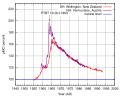 Radiocarbon bomb spike
 -
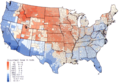 US fallout exposure
 -
Atmospheric radiation to human
-
Trinity glass activity
-
Trinity fallout
-
Total external dose rate Chernobyl
-
Air dose Chernobyl
-
Radiation levels by altitude
-
Be7 from cosmic rays


Medical Disclaimer: WikiMD is for informational purposes only and is not a substitute for professional medical advice. Content may be inaccurate or outdated and should not be used for diagnosis or treatment. Always consult your healthcare provider for medical decisions. Verify information with trusted sources such as CDC.gov and NIH.gov. By using this site, you agree that WikiMD is not liable for any outcomes related to its content. See full disclaimer.
Credits:Most images are courtesy of Wikimedia commons, and templates, categories Wikipedia, licensed under CC BY SA or similar.
Translate page: - East Asian
中文,
日本,
한국어,
South Asian
हिन्दी,
தமிழ்,
తెలుగు,
Urdu,
ಕನ್ನಡ,
Southeast Asian
Indonesian,
Vietnamese,
Thai,
မြန်မာဘာသာ,
বাংলা
European
español,
Deutsch,
français,
Greek,
português do Brasil,
polski,
română,
русский,
Nederlands,
norsk,
svenska,
suomi,
Italian
Middle Eastern & African
عربى,
Turkish,
Persian,
Hebrew,
Afrikaans,
isiZulu,
Kiswahili,
Other
Bulgarian,
Hungarian,
Czech,
Swedish,
മലയാളം,
मराठी,
ਪੰਜਾਬੀ,
ગુજરાતી,
Portuguese,
Ukrainian


