Ensete ventricosum
Ensete ventricosum, commonly known as the Ethiopian banana, false banana, or simply enset, is a species of flowering plant in the banana family, Musaceae. It is native to Ethiopia, where it is a staple food crop.
Description[edit]
Ensete ventricosum is a large, evergreen perennial plant with a short underground stem. The plant can reach up to 6 meters in height and has large, paddle-shaped leaves that can be up to 5 meters long. The plant produces a large, conical inflorescence that contains numerous small, yellow flowers.
Cultivation and uses[edit]
In Ethiopia, Ensete ventricosum is cultivated for its edible starch-rich pseudostem and corm. The plant is propagated by suckers and requires a warm, humid climate to grow. It is a staple food crop for approximately 20 million people in the country.
The pseudostem and corm of the plant are harvested and fermented to produce a food product known as kocho. The leaves of the plant are also used for wrapping food and for making mats and ropes.
Conservation status[edit]
Ensete ventricosum is not currently considered to be at risk of extinction. However, its habitat is being reduced due to deforestation and the expansion of agricultural land.
See also[edit]
 | This Ethiopia-related article is a stub. You can help WikiMD by expanding the page. |
 | This plant article is a stub. You can help WikiMD by expanding the page. |
Ensete_ventricosum[edit]
-
 Ensete ventricosum
 -
 Woman with Ensete
 -
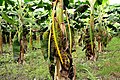 Ensete ventricosum
 -
 Ensete ventricosum
 -
 Ensete ventricosum flower detail
 -
 Ensete ventricosum
 -
 Ensete ventricosum "stem"


.jpg)


.jpg)

Medical Disclaimer: WikiMD is for informational purposes only and is not a substitute for professional medical advice. Content may be inaccurate or outdated and should not be used for diagnosis or treatment. Always consult your healthcare provider for medical decisions. Verify information with trusted sources such as CDC.gov and NIH.gov. By using this site, you agree that WikiMD is not liable for any outcomes related to its content. See full disclaimer.
Credits:Most images are courtesy of Wikimedia commons, and templates, categories Wikipedia, licensed under CC BY SA or similar.
Translate this page: - East Asian
中文,
日本,
한국어,
South Asian
हिन्दी,
தமிழ்,
తెలుగు,
Urdu,
ಕನ್ನಡ,
Southeast Asian
Indonesian,
Vietnamese,
Thai,
မြန်မာဘာသာ,
বাংলা
European
español,
Deutsch,
français,
Greek,
português do Brasil,
polski,
română,
русский,
Nederlands,
norsk,
svenska,
suomi,
Italian
Middle Eastern & African
عربى,
Turkish,
Persian,
Hebrew,
Afrikaans,
isiZulu,
Kiswahili,
Other
Bulgarian,
Hungarian,
Czech,
Swedish,
മലയാളം,
मराठी,
ਪੰਜਾਬੀ,
ગુજરાતી,
Portuguese,
Ukrainian
