Emergency sanitation
Emergency sanitation is the management and technical processes required to provide sanitation in emergency situations. Emergency sanitation is required during humanitarian relief operations for natural disasters, refugee camps, or conflict situations.
Overview[edit]
Emergency sanitation is a critical aspect of humanitarian aid. Without proper sanitation, the risk of disease transmission is high, particularly in densely populated areas such as refugee camps. The main objective of emergency sanitation is to reduce the transmission of fecal-oral diseases and exposure to disease-bearing vectors through the promotion of good hygiene practices, the provision of safe drinking water and the reduction of environmental health risks.
Components[edit]
Emergency sanitation encompasses several components:
- Excreta disposal: This involves the safe disposal of human waste to prevent the spread of diseases. This can be achieved through the use of latrines, toilets, or other means.
- Solid waste management: This involves the collection, transport, processing, recycling, or disposal of waste materials.
- Vector control: This involves measures taken to prevent or reduce the transmission of diseases by vectors, such as mosquitoes, flies, and rodents.
- Water supply: This involves the provision of safe and clean drinking water.
- Hygiene promotion: This involves promoting good hygiene practices to prevent disease transmission.
Challenges[edit]
There are several challenges associated with emergency sanitation. These include the rapid onset of emergencies, the movement of populations, the lack of infrastructure, and the need for rapid response. Other challenges include cultural and social acceptance, the availability of resources, and the need for sustainable solutions.
Solutions[edit]
Various solutions have been proposed and implemented to address the challenges of emergency sanitation. These include the use of innovative technologies, such as composting toilets, the use of locally available resources, and the involvement of the affected communities in the planning and implementation of sanitation facilities.
See also[edit]
 | This emergency services–related article is a stub. You can help WikiMD by expanding the page. |
-
 Raised toilet in Haiti
 -
 Open defecation along the river bank
 -
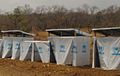 Emergency sanitation by UNHCR
 -
 Temporary manhole toilet for disaster
 -
 Emergency pit lining kits by Evenproducts
.jpg)
.jpg)


.jpg)
Advertise on WikiMD — 81,000+ full articles, ~900,000 total pages, ~250 million page views. Global reach, limited time promotional rates from $1/page/day. Learn more · View stats

Medical Disclaimer: WikiMD is for informational purposes only and is not a substitute for professional medical advice. Content may be inaccurate or outdated and should not be used for diagnosis or treatment. Always consult your healthcare provider for medical decisions. Verify information with trusted sources such as CDC.gov and NIH.gov. By using this site, you agree that WikiMD is not liable for any outcomes related to its content. See full disclaimer.
Credits:Most images are courtesy of Wikimedia commons, and templates, categories Wikipedia, licensed under CC BY SA or similar.
Translate page: - East Asian
中文,
日本,
한국어,
South Asian
हिन्दी,
தமிழ்,
తెలుగు,
Urdu,
ಕನ್ನಡ,
Southeast Asian
Indonesian,
Vietnamese,
Thai,
မြန်မာဘာသာ,
বাংলা
European
español,
Deutsch,
français,
Greek,
português do Brasil,
polski,
română,
русский,
Nederlands,
norsk,
svenska,
suomi,
Italian
Middle Eastern & African
عربى,
Turkish,
Persian,
Hebrew,
Afrikaans,
isiZulu,
Kiswahili,
Other
Bulgarian,
Hungarian,
Czech,
Swedish,
മലയാളം,
मराठी,
ਪੰਜਾਬੀ,
ગુજરાતી,
Portuguese,
Ukrainian

